Skip to content
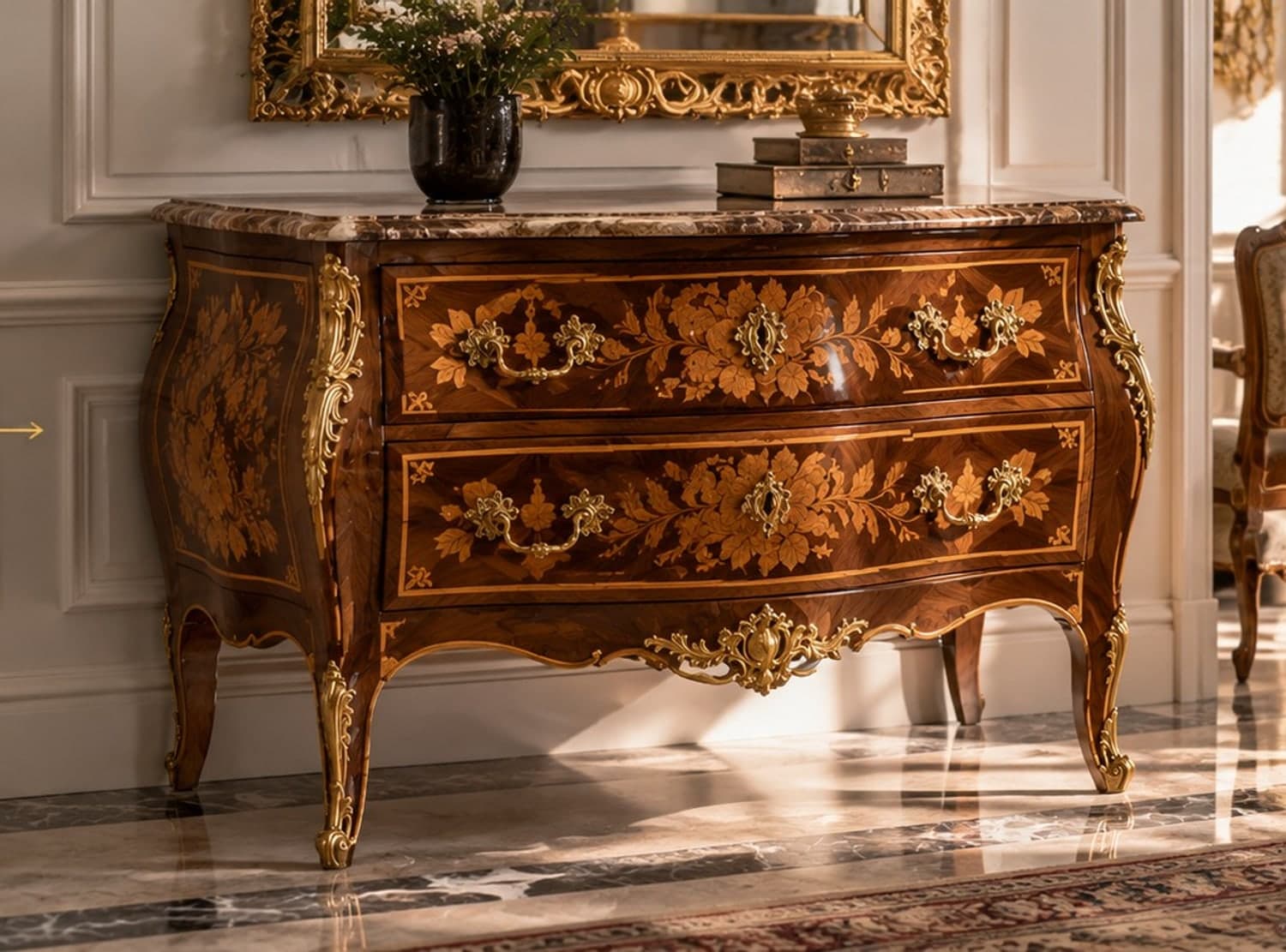
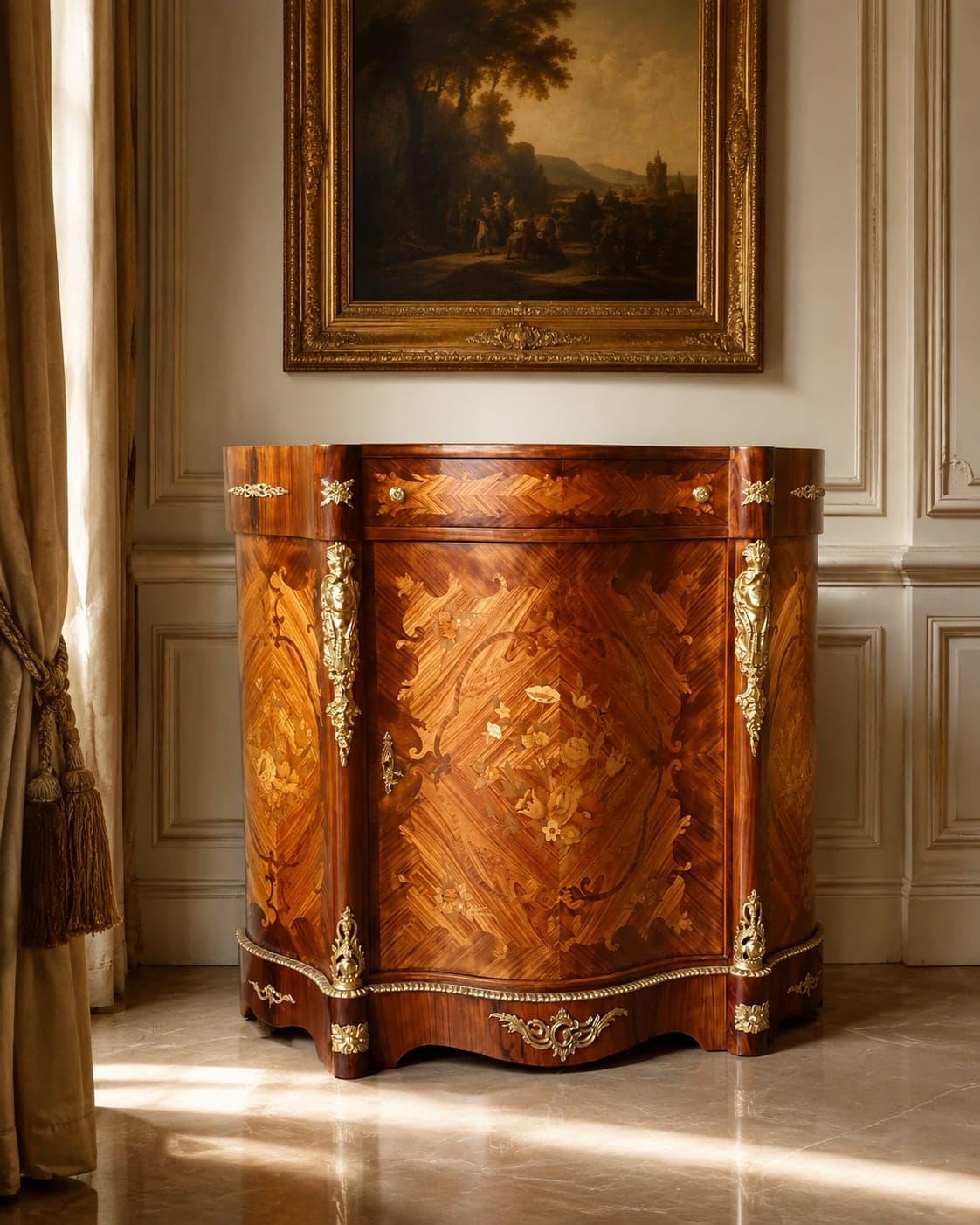
Bombé Louis XV commode with floral marquetry and gilt bronzes, restored and back in place in a panelled interior

Heritage & Restoration

Preserving what deserves to last

Entrusting a piece is no small act. The House surrounds it with a written method, from the first look to the final dossier handed over with the furniture.

Workshop case files

What the workshop received, what it returned

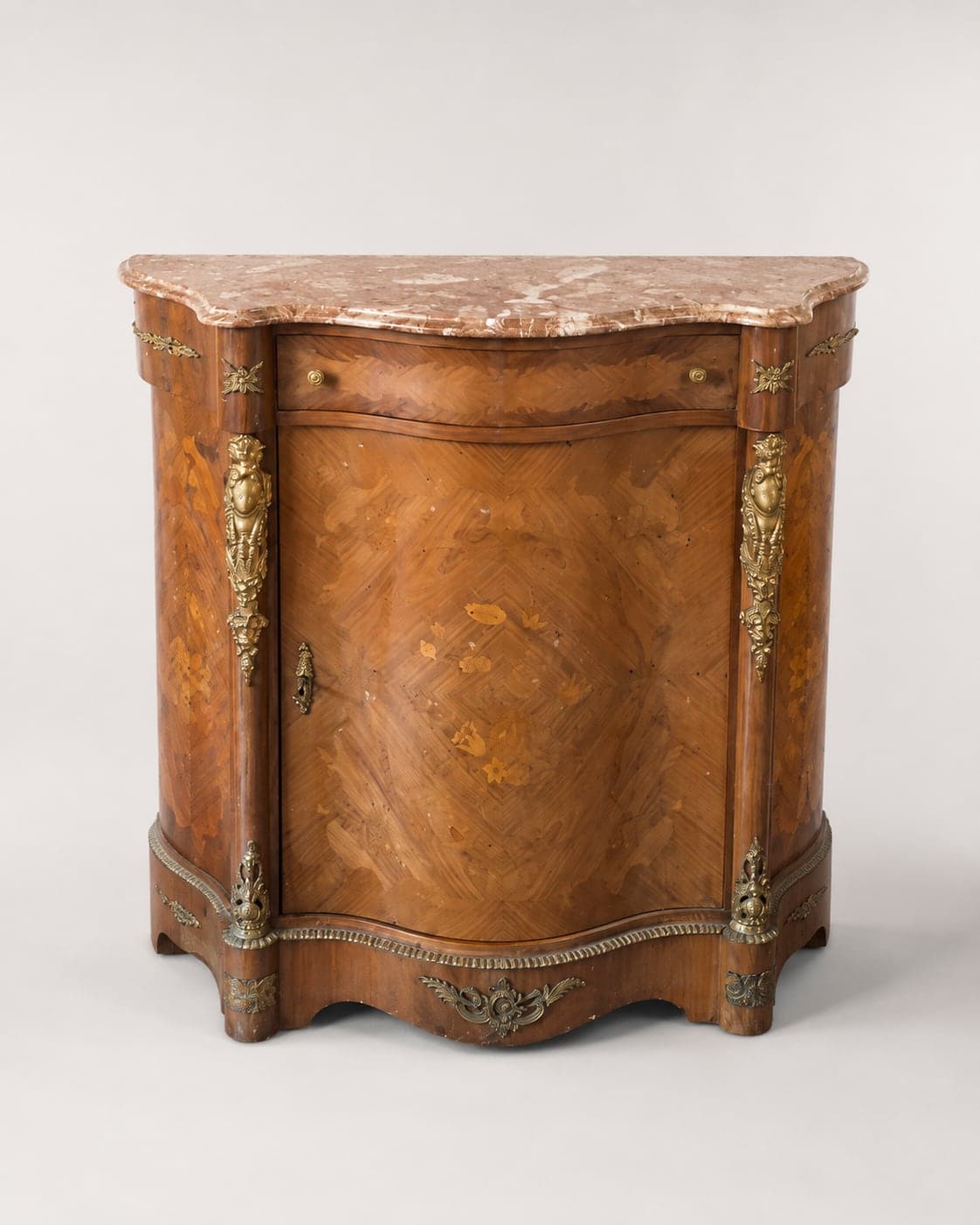
The bombé low cabinet on arrival: oxidised varnish, contrast of the woods masked, tarnished bronzes
Before
The same low cabinet after treatment: hand-built French polish, floral marquetry revived, bronzes restored to their gilding
After

Revival of a bombé low cabinet with floral marquetry

Low cabinet with bombé front and sides — Transition Louis XV / Louis XVI spirit

Assessment

The wood had been dulled by time and ultraviolet light. The old oxidised varnishes masked the natural contrast of the woods; veneers had lifted or were missing, and the gilt bronzes had lost their lustre.

Work carried out

  • Diagnosis and dismantling — Careful removal of all the bronze mounts and the lockwork, to protect the carcase during the work.
  • Stripping and cleaning — Removal of the old oxidised varnishes that masked the natural contrast of the woods.
  • Marquetry repairs — Lifted or missing veneers were made good with hot hide glue — bone and sinew glue — to respect the historical integrity of the piece.
  • Cleaning of the mounts — The bronzes were cleaned with gentle solutions, to revive the original gilding without altering it.
  • French polishing — Application of a traditional shellac French polish, built up coat by coat by hand. It "wets" the wood, restoring the depth of the tulipwood and the colours of the marquetry.

Technical sheet

Typology
Single-door low cabinet, bombé front and sides
Style
Transition Louis XV / Louis XVI spirit
Dimensions
Height 105 cm | Width 115 cm | Depth 48 cm
Woods
Tulipwood veneer, purpleheart framing, sycamore maple and boxwood for the marquetry; solid oak carcase
Mounts
Gilt bronze: corner mounts with espagnolette heads, sabots, central apron mount, escutcheons
Top
Brocatelle or breccia marble

Workshop time and team

Close to 140 hours of work.
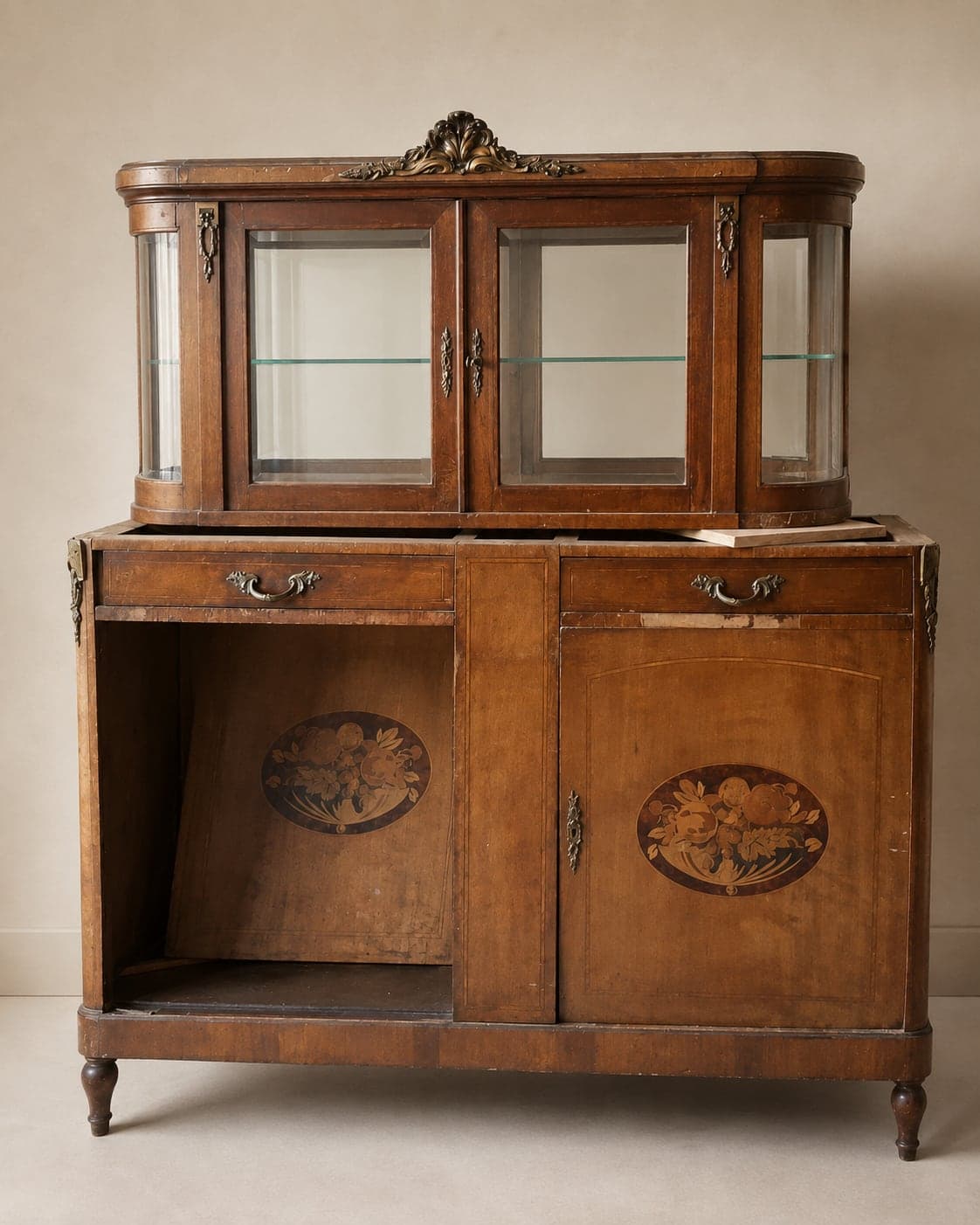
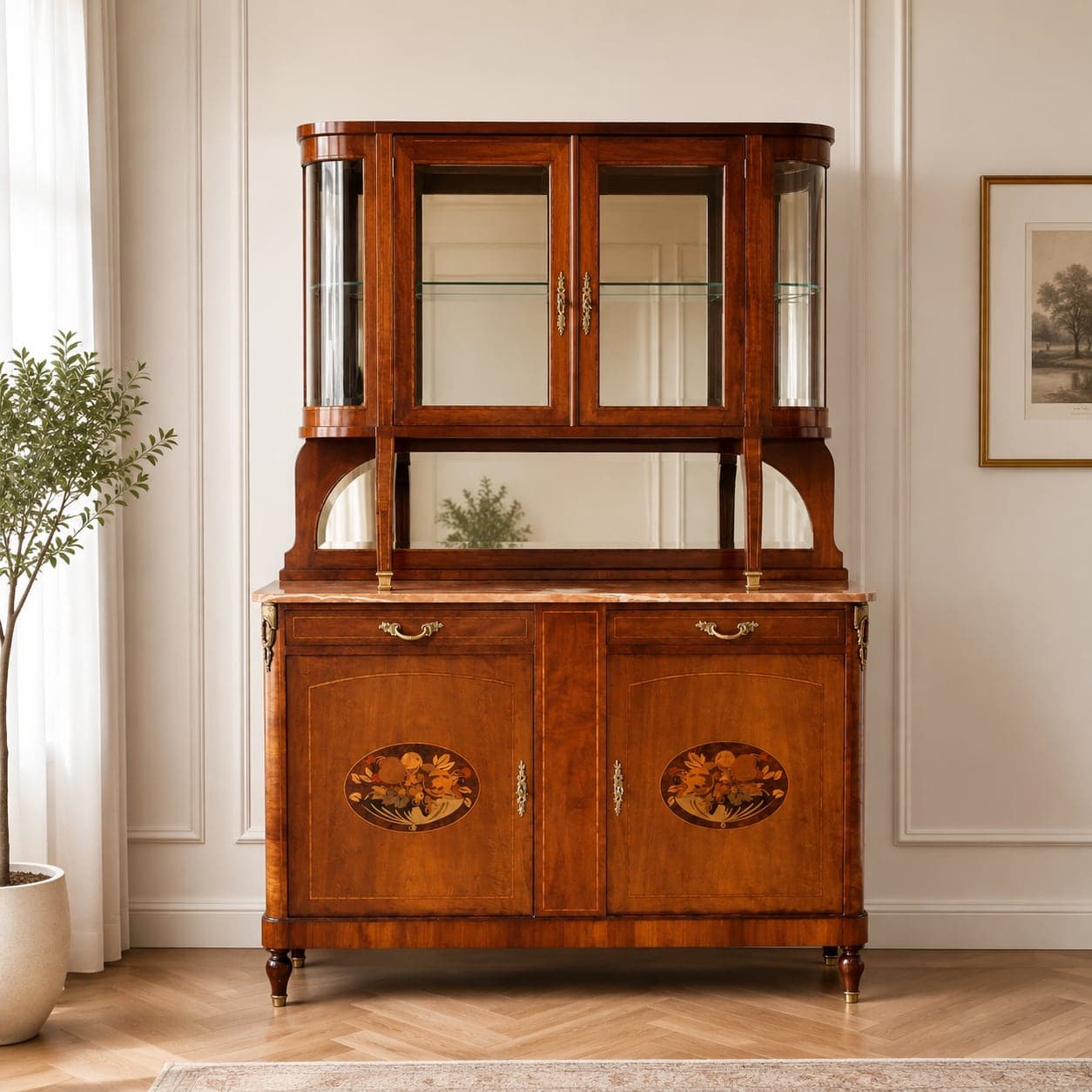
Glazed buffet on arrival at the workshop: lower left door missing, dulled varnish, soiled marquetry
Before
The same glazed buffet after intervention: door reconstructed, French polish renewed, bronzes polished, marble top fitted
After

Revival of a glazed buffet with floral marquetry

Two-part buffet / glazed credenza of classical inspiration — Napoléon III / Transition style

Assessment

This two-part buffet reached the workshop in a critical state. The lower left door was entirely missing, exposing the internal structure. The original varnish was dulled, dried out and scratched, masking the richness of the grain. The floral marquetry was soiled and lifting in places; the bronze and brass mounts had lost all their lustre.

Work carried out

  • Historical reconstruction — Bespoke making of the missing door. The chief difficulty was reproducing the floral marquetry medallion exactly, selecting and cutting woods — burl, fruitwoods — to echo the original right-hand door.
  • Surface restoration — Gentle stripping and re-laying of the lifted veneers. Application of a traditional shellac French polish, built up by hand layer after layer to reveal the depth of the walnut and the mahogany.
  • Enhancement of the details — Deep cleaning and polishing of the bronze mounts — shell pediment, corner mounts, sabots — to recover the original gilding without altering the chasing.
  • Architectural additions — Fitting of a veined marble top at the junction of the two sections, and installation of a mirror at the back of the credenza to multiply the light and lighten the volume.

Technical sheet

Typology
Two-part buffet / glazed credenza, Napoléon III / Transition style
Materials
Solid wood carcase, precious wood veneer, polychrome floral marquetry, bronze mounts, marble top, bowed glass panes
Techniques
Veneer patching, fine marquetry, traditional French polishing, marble restoration

Where this piece belongs

Formal dining room, large hall or vestibule as a statement piece, executive office as a collector's display cabinet.

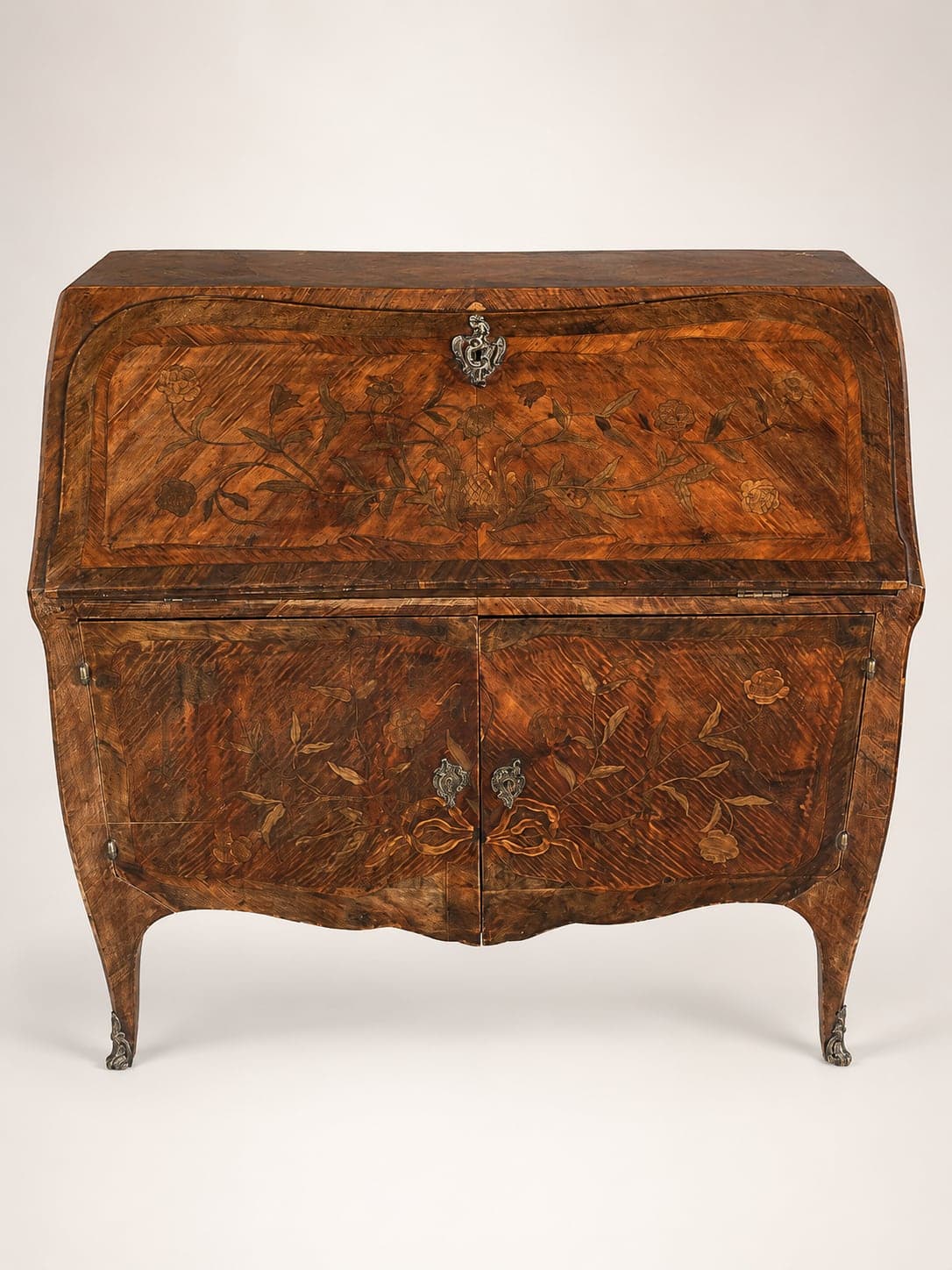
Slant-front desk on arrival: light-damaged and soiled varnish, oxidised bronzes
Before
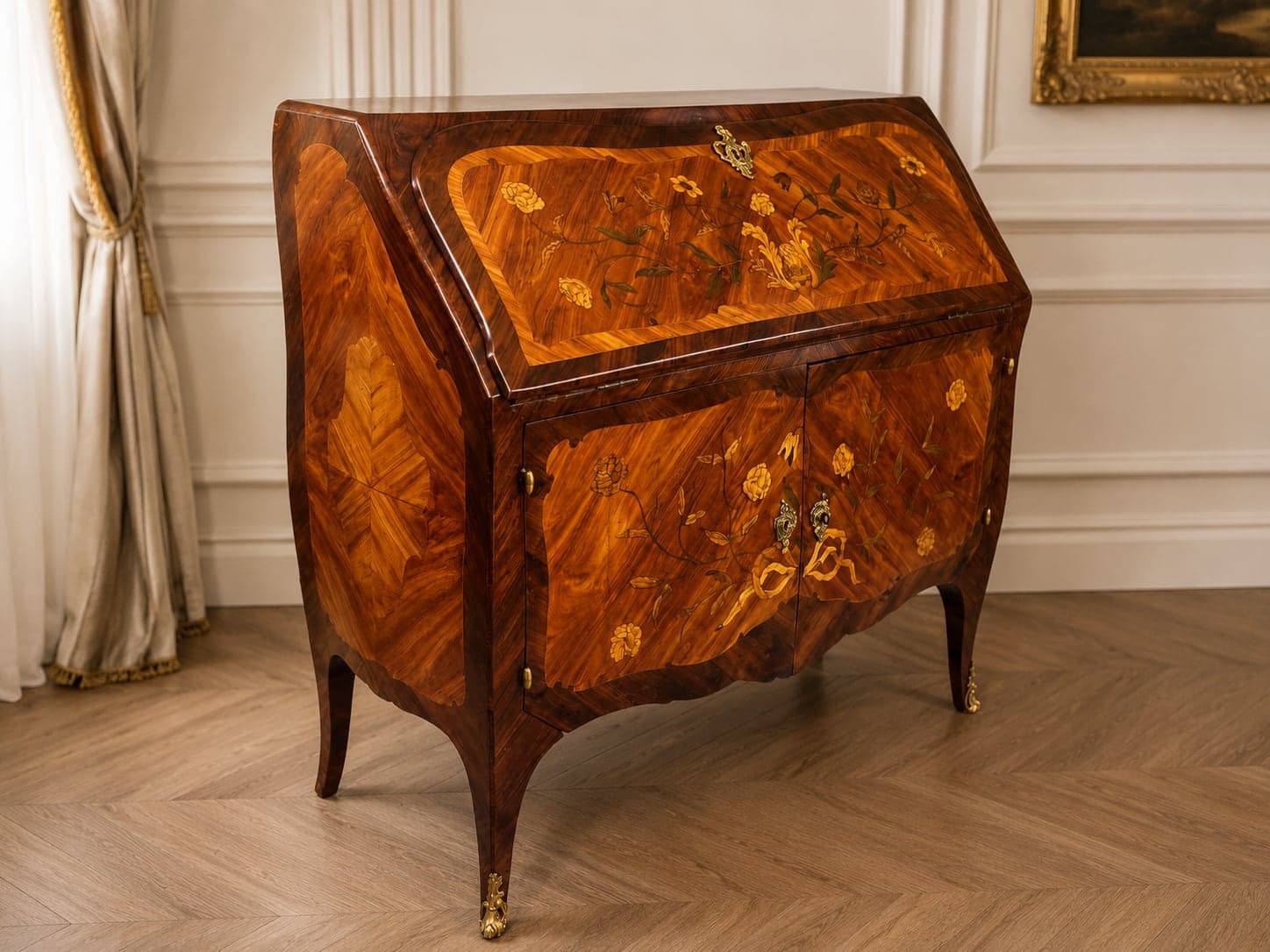
The same desk after treatment: French polish regenerated, floral marquetry made legible again, bronzes polished
After

The revival of a Louis XV slant-front desk

Slant-front desk, known as a "bureau de dame" or "bureau dos d'âne" — Louis XV style

Assessment

On its arrival at the workshop, this desk suffered from an old varnish, badly light-damaged and soiled, which entirely obscured the work of the front. The bronze mounts were oxidised and the wood could barely breathe.

Work carried out

  • Stripping and regeneration — Careful removal of the old varnish without attacking the original patina of the wood, followed by the re-gluing with hide glue of veneers lifted over time.
  • Restoration of the marquetry — Filling of the micro-losses in the floral decoration with species rigorously identical to those of the period.
  • Enhancement of the mounts — Complete dismantling, cleaning in a gentle bath and hand polishing of the bronzes — sabots (foot mounts), escutcheons — to revive the chasing without distorting it.
  • French-polished finish — Application of a genuine shellac French polish, built up by hand layer after layer. This technique alone can restore the mirror effect and the visual depth of the figured veneer.

Technical sheet

Typology
Slant-front desk with sloping fall-front and cabriole legs, Louis XV style
Carcase
Solid oak
Veneering
Figured tulipwood and kingwood veneer
Decoration
Polychrome floral marquetry — boxwood, sycamore maple, stained fruitwoods
Mounts
Finely chased bronze on the sabots and escutcheons
Dimensions
Width ~95 cm | Height ~100 cm | Depth with fall-front closed ~48 cm
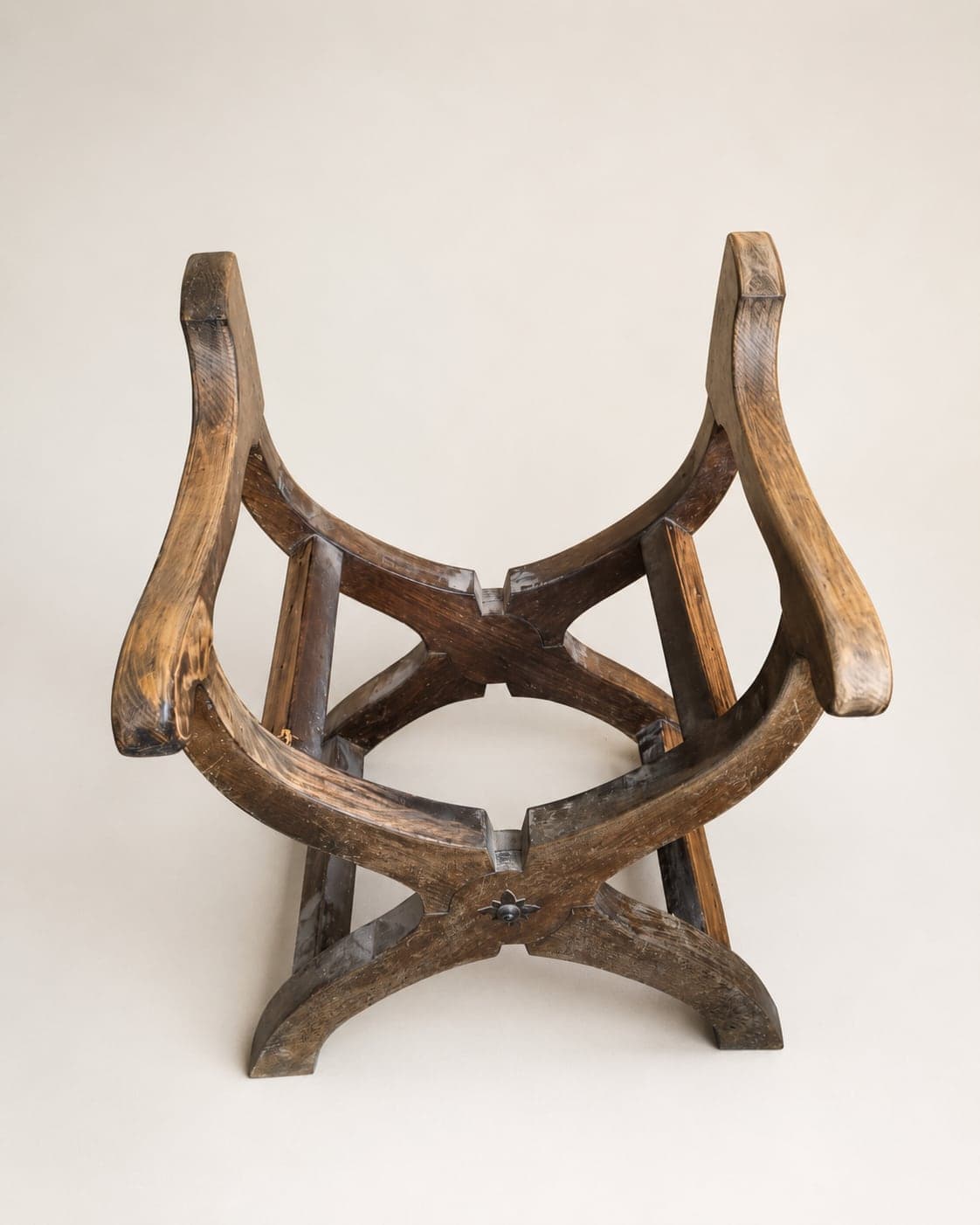
Savonarola chair on arrival: crossed frame laid bare, without seat or back
Before
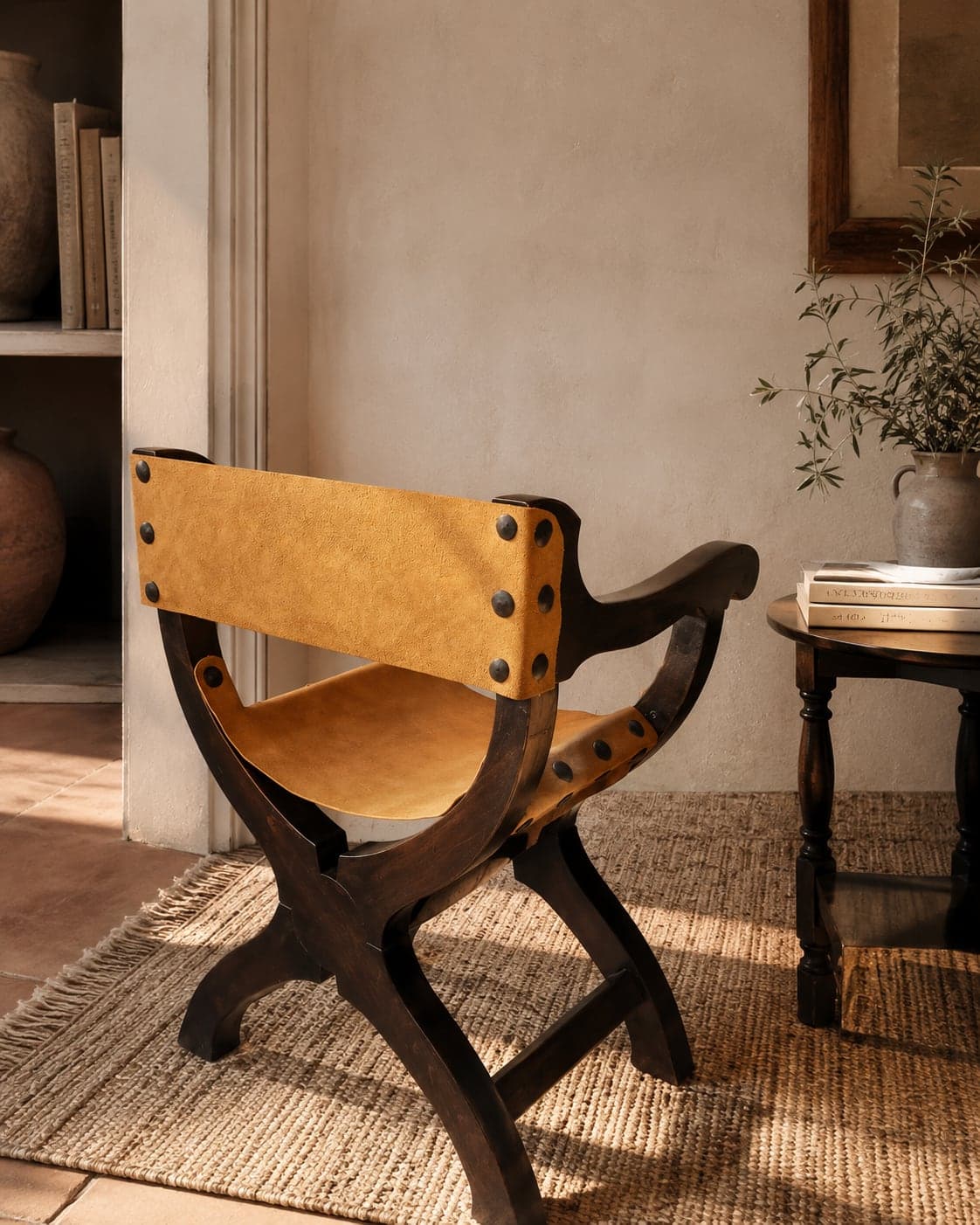
The same chair after intervention: joints consolidated, walnut fed, seat and back in full-grain leather nailed by hand
After

A Savonarola chair returned to use

Folding chair of the Savonarola / Dante type — curule chair with crossed frame

Assessment

On arrival, this Renaissance-inspired chair presented a bare skeletal frame, stripped of its functional elements. The structure suffered from marked drying-out, surface damage and critical structural play at the X-shaped crossings. The complete absence of seat and back made the piece unusable.

Work carried out

  • Structural consolidation — Reworking of the X-shaped joints, cleaning of the rebates and traditional gluing to restore mechanical strength without altering the historical integrity of the piece.
  • Treatment and patina of the wood — Cleaning of the oxidised layers, careful sanding and deep feeding — a blend of hard oils and beeswax — to revive the warmth of the walnut.
  • Leatherwork and upholstery — Bespoke making of the curved back and the suspended seat in full-grain bull calf leather, fixed and spaced by hand with forged upholstery nails.

Technical sheet

Model
Savonarola / Dante folding chair, curule chair with crossed frame
Wood
Finely figured solid walnut
Associated materials
Full-grain leather in an ochre / honey tone, aged iron upholstery nails
Dimensions
Width 68 cm | Overall height 76 cm | Depth 60 cm

Workshop time and team

About 40 hours of work spread over two weeks, to respect the drying times and the tensioning of the leather. One master cabinetmaker specialising in complex joinery and one saddler-upholsterer.

Where this piece belongs

Seating and collectors' furniture — for an interior seeking the union of patinated wood and a warm leather.

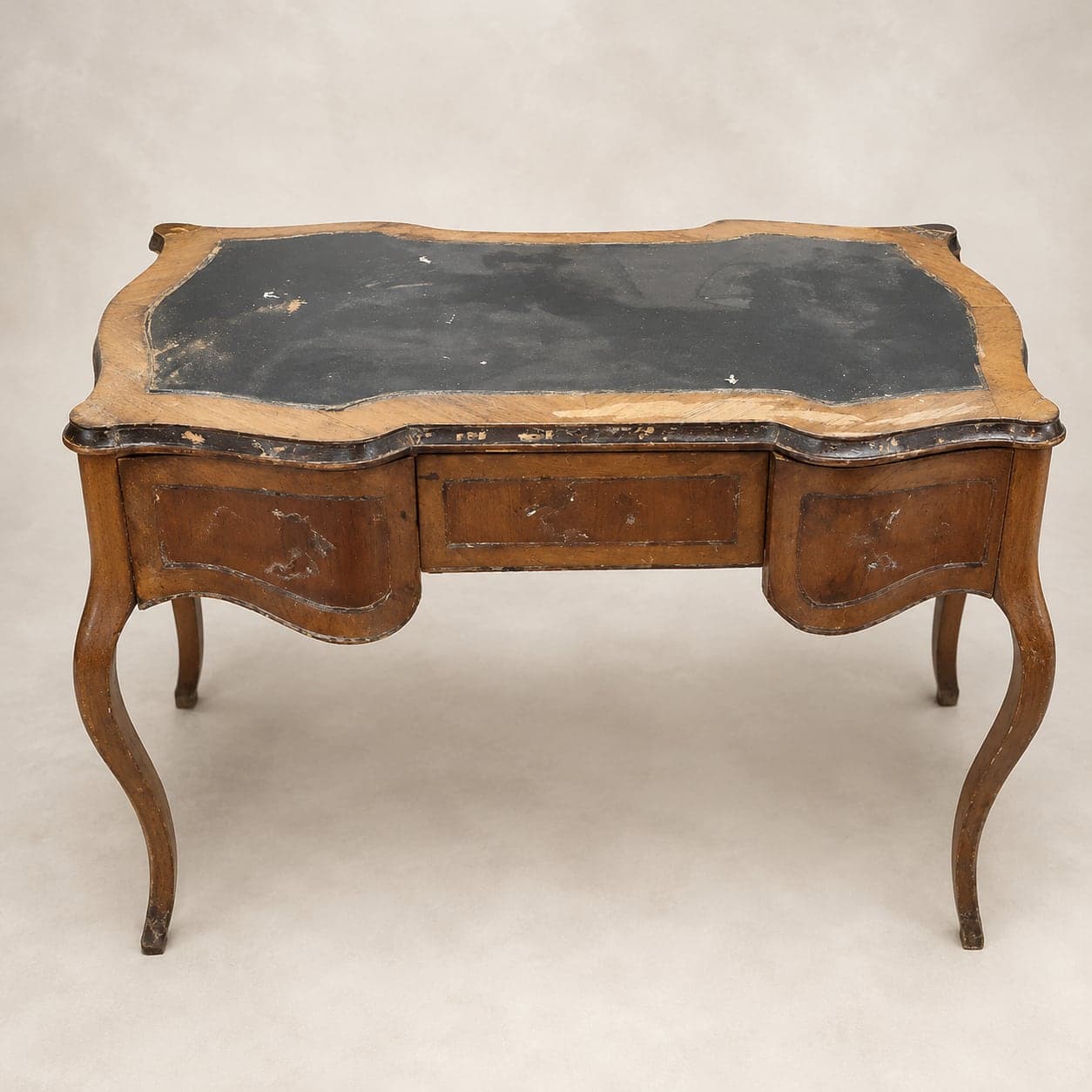
Louis XV style bureau plat on arrival: worn top, blackened writing surface and damaged edges
Before
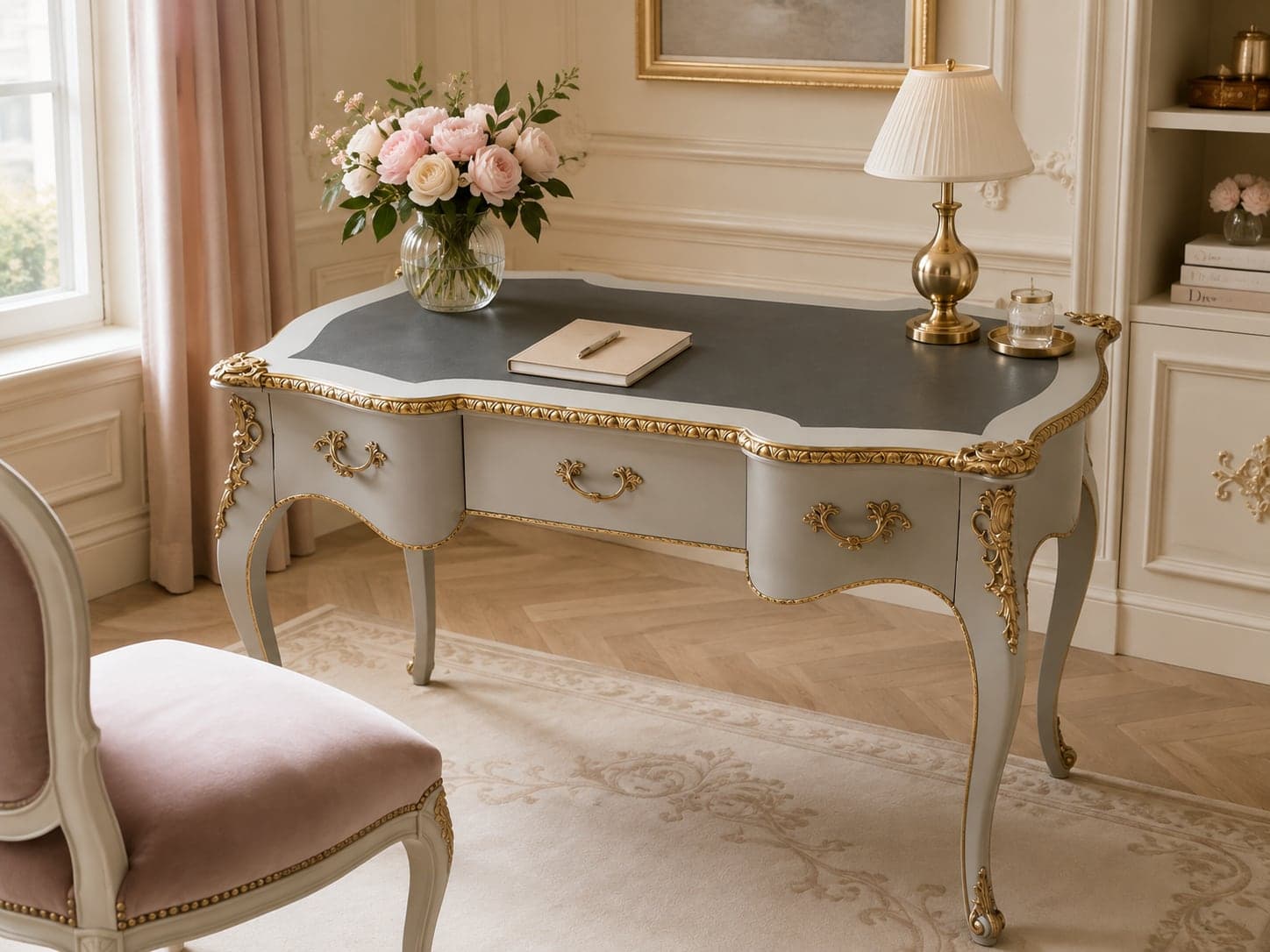
The same bureau plat after intervention: pale finish, restored top and gilded ornament brought back into view
After

A Louis XV style bureau plat brought back to light

Bureau plat with shaped top, cabriole legs and central writing surface

Assessment

The desk arrived with a badly worn surface: the top rubbed, the writing surface blackened, the edges damaged, the old finishes incomplete and the ornament no longer legible. The silhouette remained elegant, but the piece had lost its character as a ceremonial desk.

Work carried out

  • Stabilising the structure — Inspection of the carcase, reworking of the joints and preparation of the worn areas before any finishing work.
  • Reworking the edges and the top — Levelling of the edges, cleaning of the old layers and reintegration of the central writing surface.
  • Preparation for the finish — Successive sanding and surface priming to obtain an even, level surface across the shaped sections and the fronts.
  • Pale finish and gilded accents — Application of a pale finish, then rework of the gilded lines and mounts to restore the desk's decorative relief.

Technical sheet

Typology
Bureau plat with three drawers, shaped top and cabriole legs
Style
Louis XV / Rococo inspiration
Finish
Pale satin finish, dark writing surface, gilded accents
Use
Lady's desk, executive desk or ceremonial piece
Dimensions
To be confirmed at the workshop

Where this piece belongs

A private study, a reading room or a reception room where the desk is to remain legible as the central object.

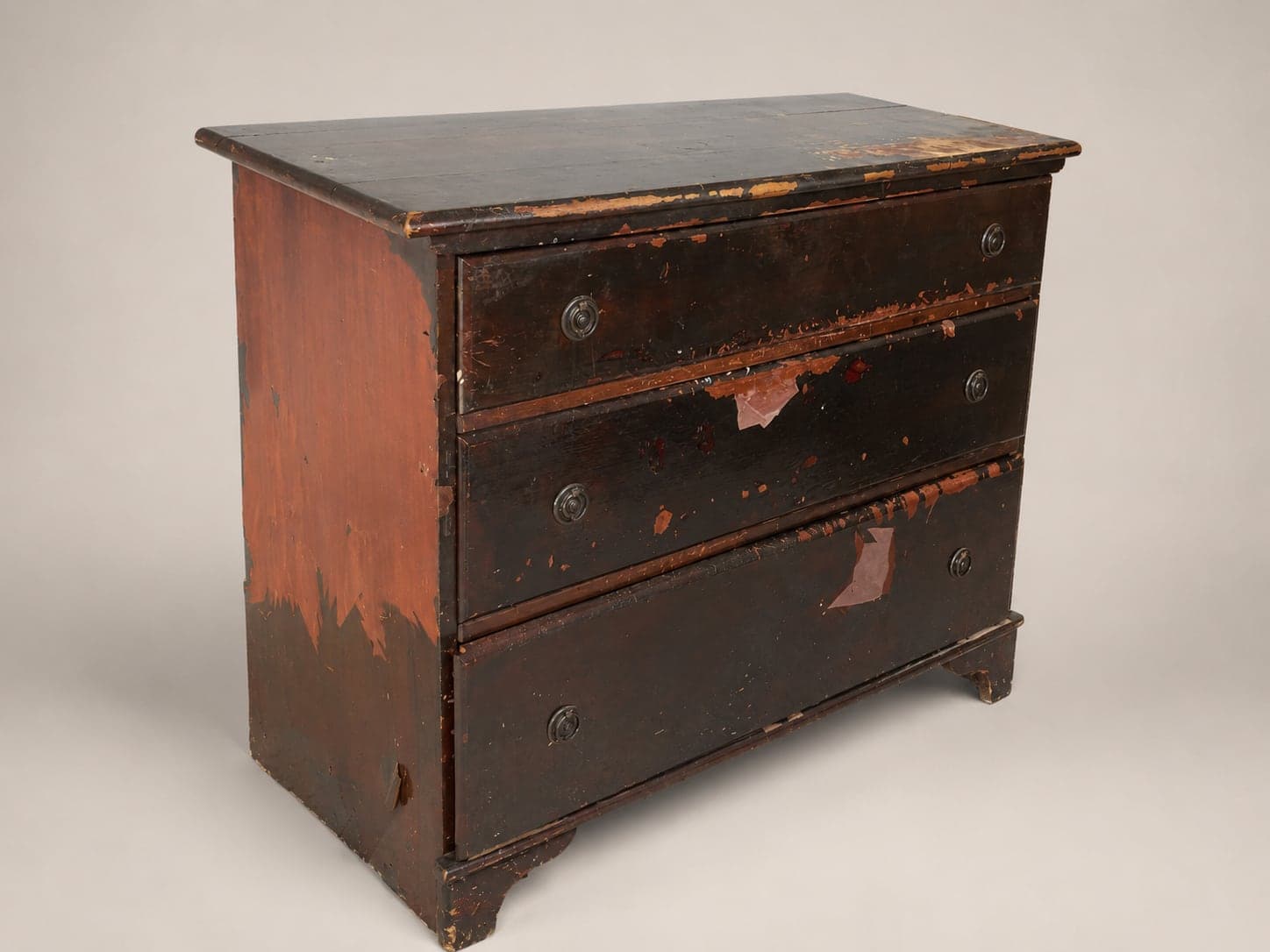
Rustic commode on arrival: flaking layers of paint, crazed surface
Before
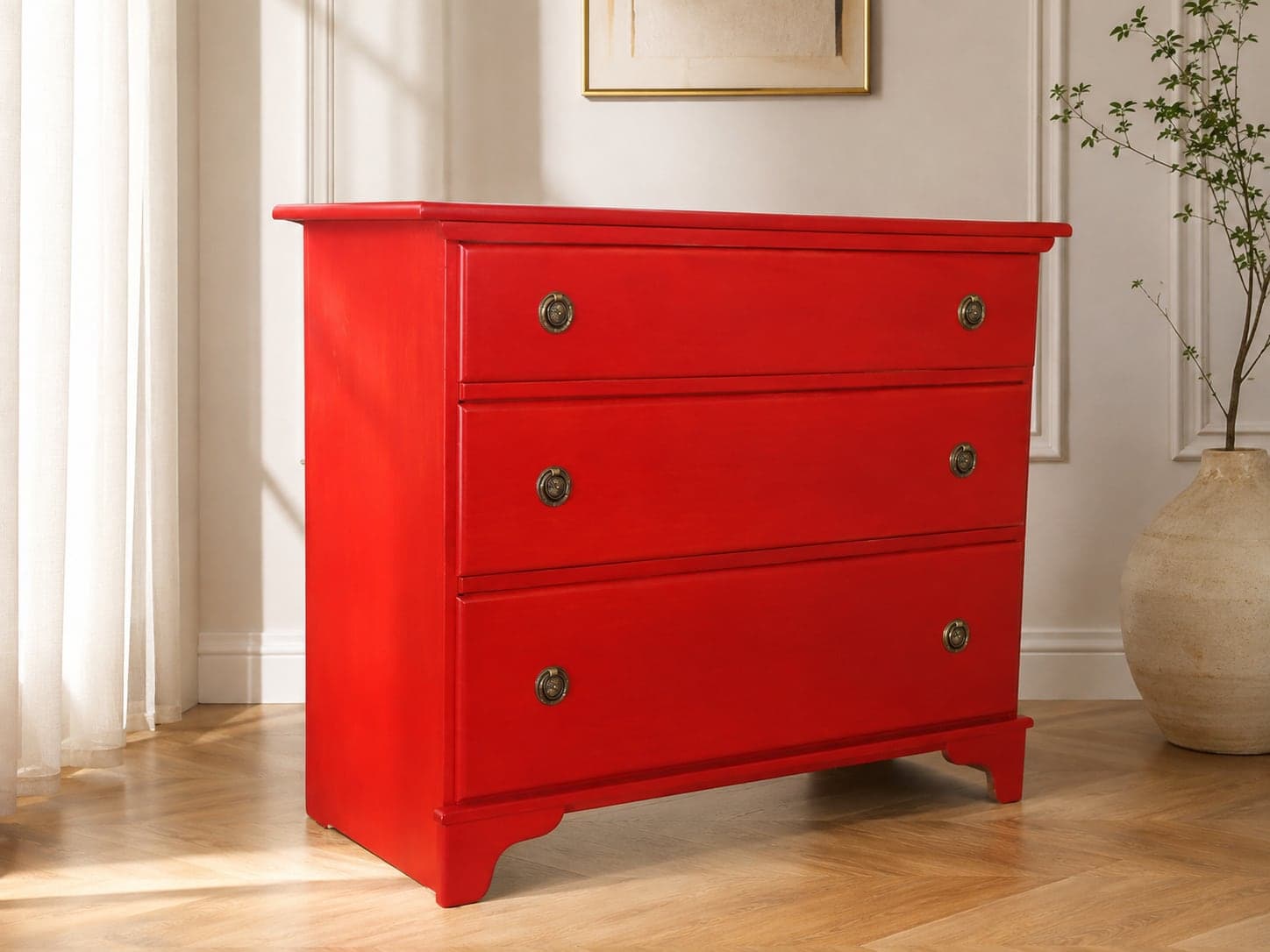
The same commode after intervention: satin cardinal red lacquer, polished brass hardware
After

Transformation of a rustic commode in cardinal red lacquer

Straight-fronted three-drawer commode, rustic / country style

Assessment

On arrival, this commode bore the marks of an eventful past. Trapped beneath several flaking layers of paint — black over a red primer — the surface was deeply unstable and crazed. The decision was not to return this country piece to bare wood, but to embrace a contemporary finish and make of it an assertive design object.

Work carried out

  • Stripping back and stabilising — Complete thermal and chemical stripping to remove decades of flaking paint and recover a sound substrate.
  • Preparing the substrate — Coachwork-style preparation: treatment of the wood, filling of the deeper defects, levelling compound and successive very fine sandings to obtain an absolutely flat surface — the essential condition of a successful lacquer.
  • Colouring and lacquer — Spray-booth application of a cardinal red lacquer with a deep satin finish. It protects the wood while setting up a contrast with the classical architecture of the piece.
  • Enhancing the hardware — The original ring pulls on their backplates were removed, stripped of residual paint and polished to bring out the natural sheen of the matt brass.

Technical sheet

Typology
Straight-fronted commode with three stacked drawers, overhanging top, plinth on shaped console feet
Carcase
Solid wood — traditionally pine, poplar or beech for furniture intended to be painted
Finish
High-resistance polyurethane lacquer, cardinal red, satin
Mounts
Drop handles with rings on circular backplates in solid brass
Dimensions
Width ~100 cm | Height ~85 cm | Depth ~45 cm

Workshop time and team

About 40 to 50 hours. Applying the lacquer is quick; it is the preparation of the ground — stripping, filling, sanding — that takes 80 % of the time and guarantees a flawless surface. One surface-preparation specialist and one lacquer painter.

Entrust a piece to the workshop

Our method

Seven steps, no improvisation

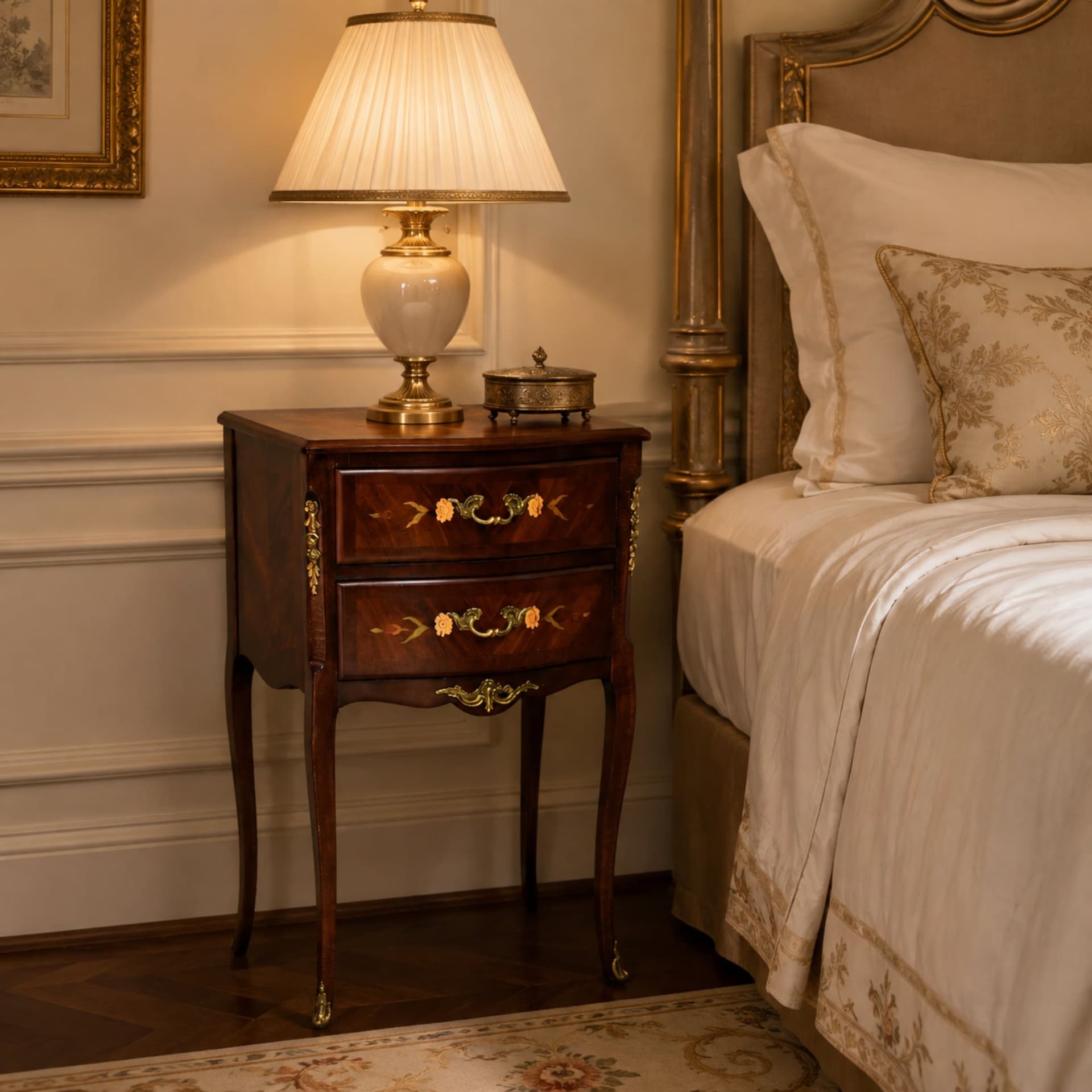
Curved occasional table staged beside a bed
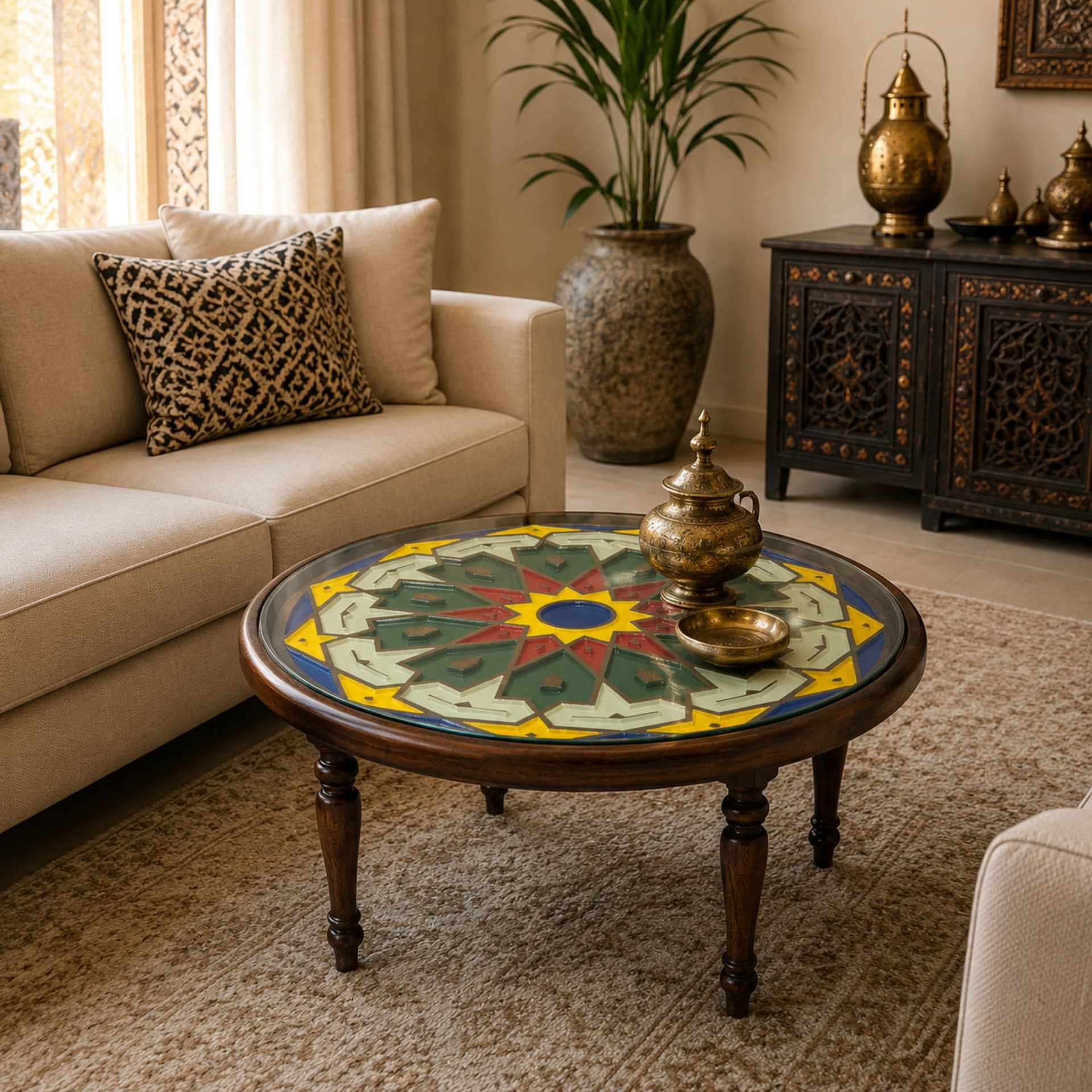
Geometric rosette coffee table staged in a living room
  1. 01

    Discovery

    You discover our method, our documented before/after cases and our commitments on confidentiality, transport and insurance.

  2. 02

    Pre-assessment

    A form in five parts — object, condition, history, location, media — gives us a first reading of your piece.

  3. 03

    Qualification

    We assess perceived heritage value, urgency, complexity and transport conditions to shape the next step.

  4. 04

    Consultation

    Remotely, at the atelier or on site: an in-depth exchange clarifies the true condition of the piece and your expectations.

  5. 05

    Proposal

    Preliminary diagnosis, intervention protocol, exclusions, lead time, transport, insurance: everything is in writing before work begins.

  6. 06

    Execution

    Reception, dismantling, stabilisation, restoration, finishing, inspection, return: every milestone is documented.

  7. 07

    Final dossier

    Photographs, work carried out, materials used, replaced parts and care recommendations are handed over with the piece.

Three commitments

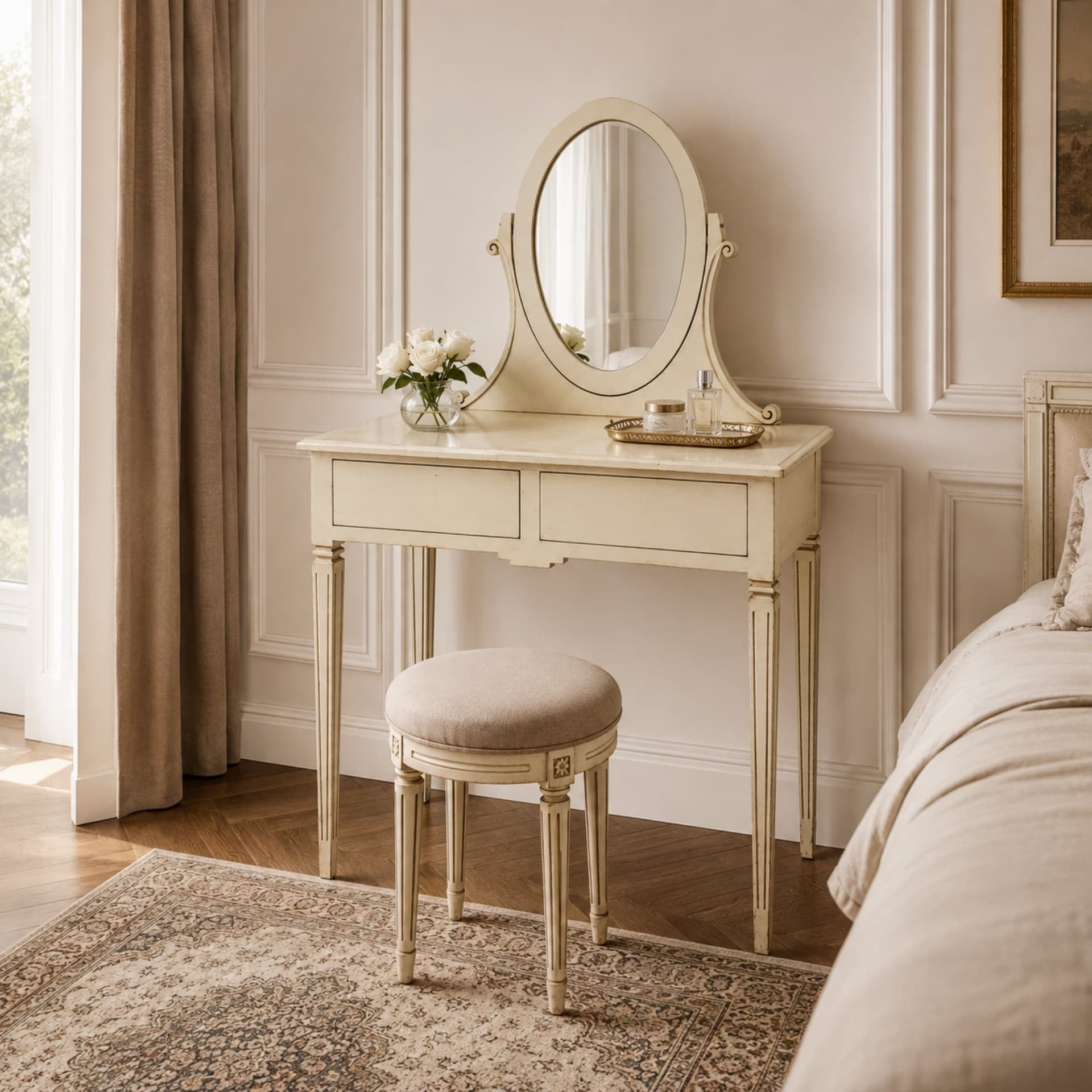
Ivory dressing table presented in a soft-toned bedroom

Confidentiality

Your piece, its provenance and its owner are never published without your written consent. Files remain private.

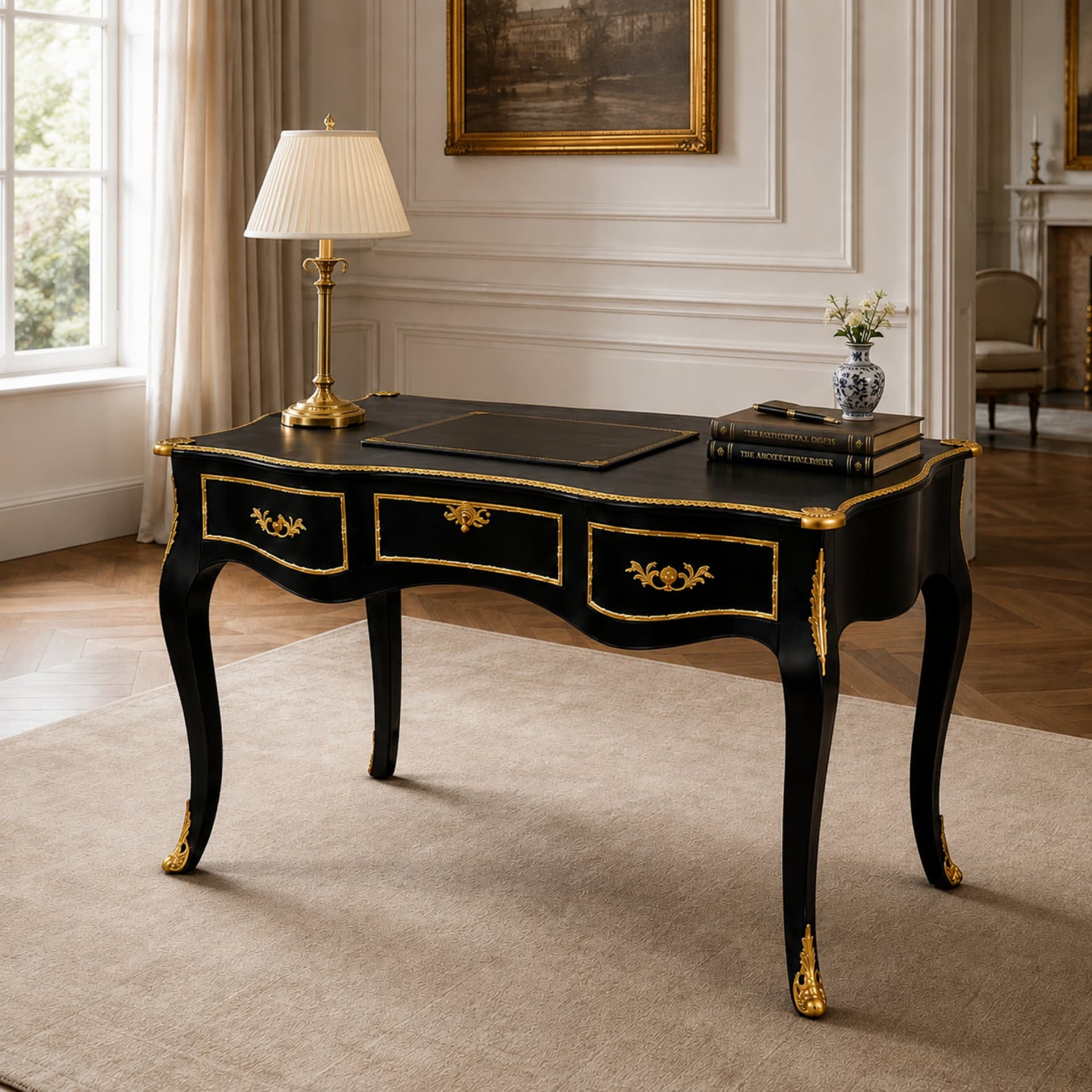
Black and gold writing desk presented in a light-panelled interior

Transport

Packing, collection and delivery are arranged with carriers accustomed to valuable furniture, or according to your own arrangements.

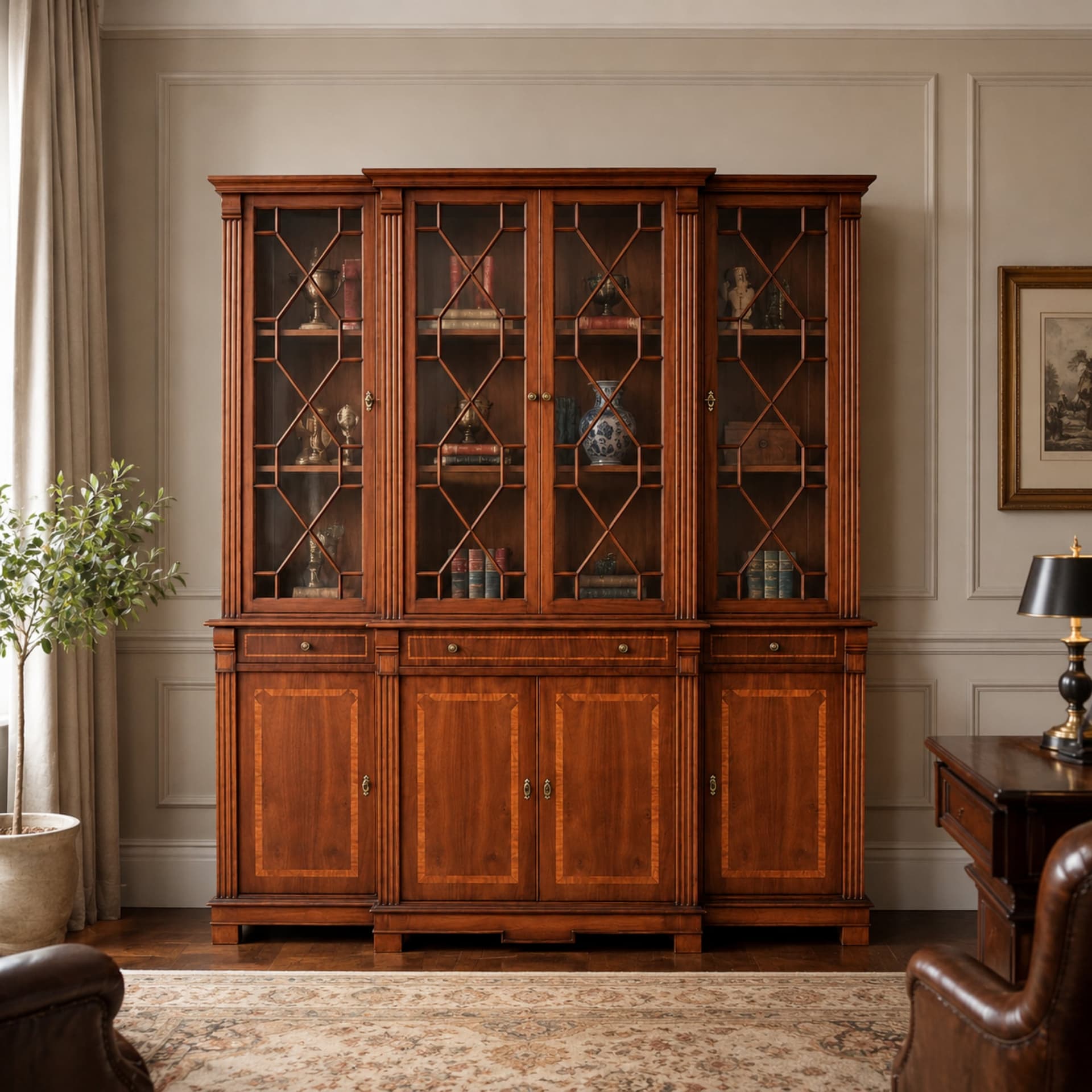
Glazed bookcase presented in a classical interior

Insurance

The piece is covered during transport and its stay at the atelier, under conditions set out in the written proposal.

FAQ

Frequently asked questions

Can you quote a price before seeing the piece?

No — and that is a guarantee. No final price is set before inspection: the true condition of a piece (substrate, glues, veneers, finishes) cannot be read from a photograph. The pre-assessment does, however, let us orient the process quickly.

Does my piece need to be antique or signed to be entrusted to you?

No. We restore what deserves to last: an unsigned family piece can warrant as much care as a stamped one. The heritage value you place on it is part of the diagnosis.

How is an antique piece of furniture transported?

Never improvised: dismantling where needed, protection of fragile parts, fitted packing and a specialised carrier. Transport and insurance conditions are set out in writing before any collection.

Do you replace original parts?

As little as possible. We conserve first, consolidate next, and only replace what can no longer perform its function. Every replaced part is recorded in the final dossier.

How long does a restoration take?

It depends on the condition of the piece and the chosen protocol: from a few weeks for a targeted intervention to several months for a full restoration. The lead time is fixed in the written proposal, milestone by milestone.

Before, during, after

What the atelier has in hand

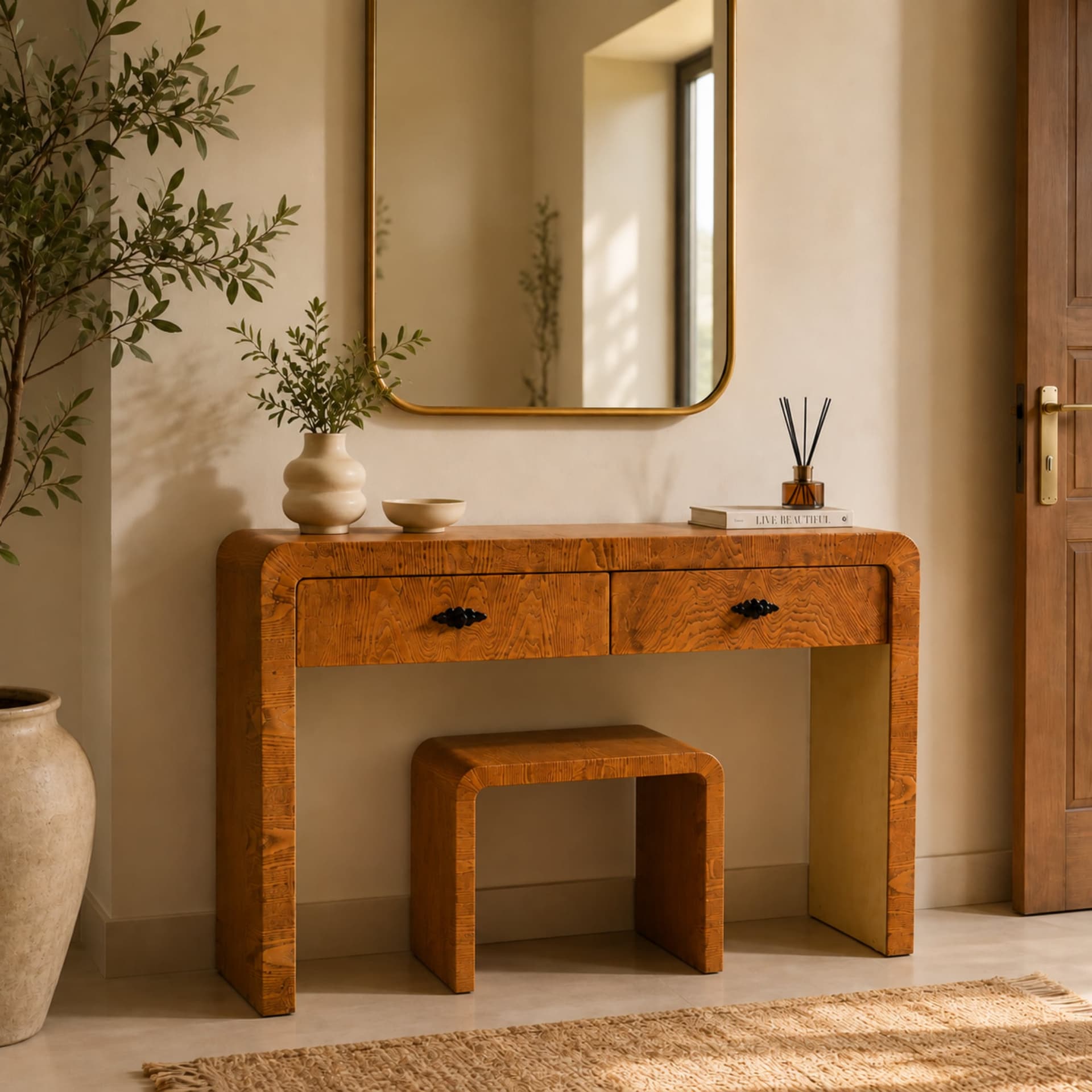
Rounded console and nesting table staged in an interior
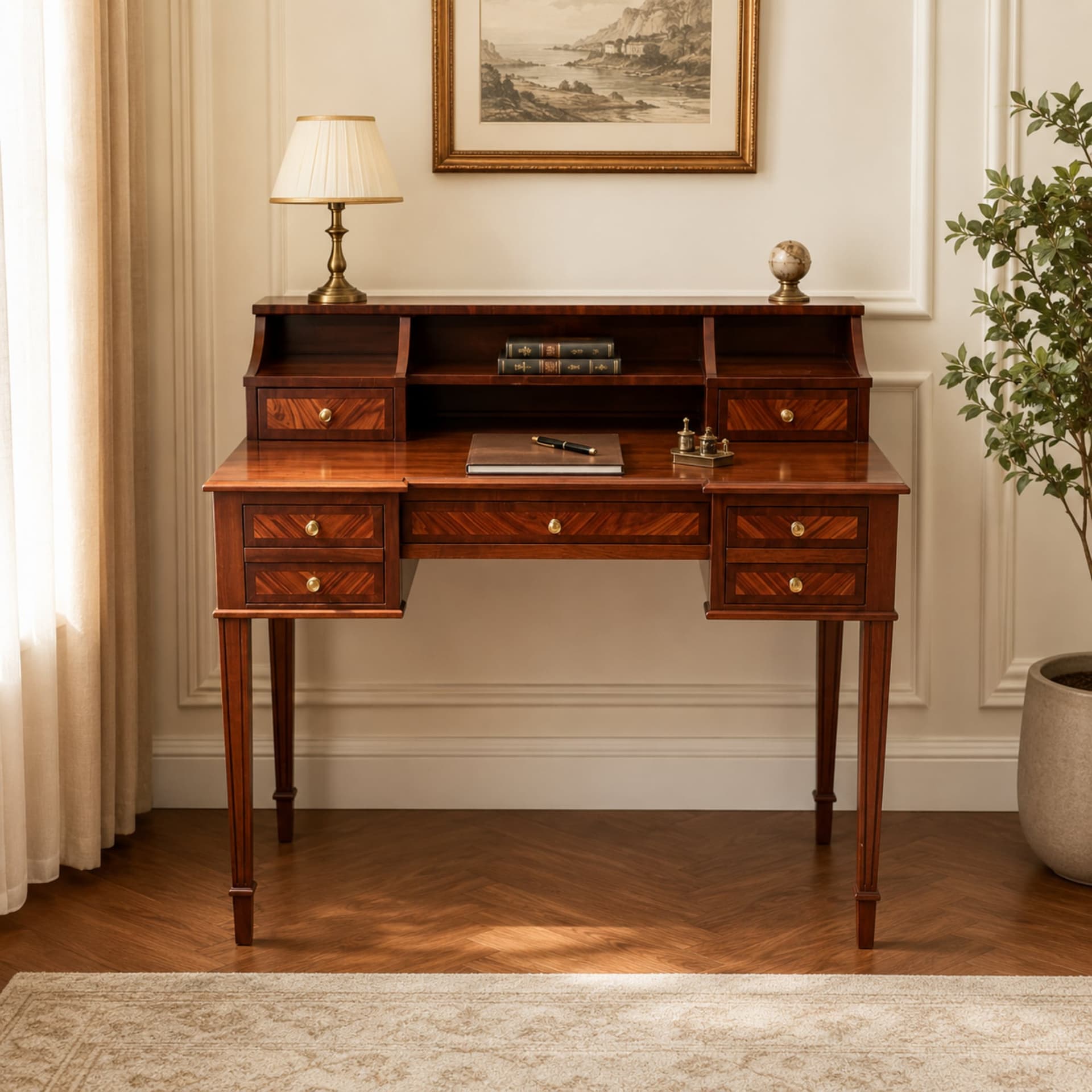
Writing desk with raised gallery presented in a light interior
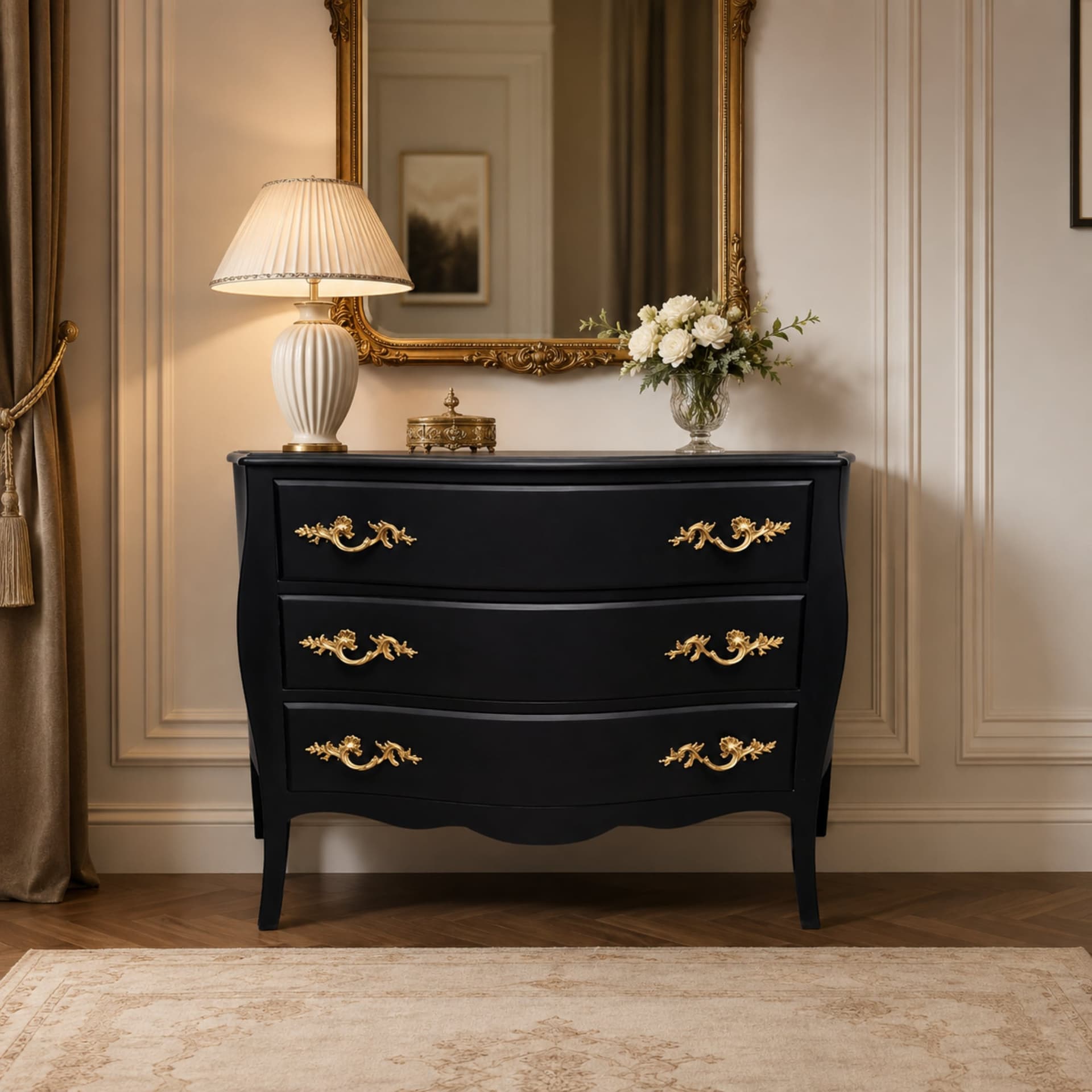
Black commode presented in a light classical interior
Heritage & Restoration · AZ Ameublement