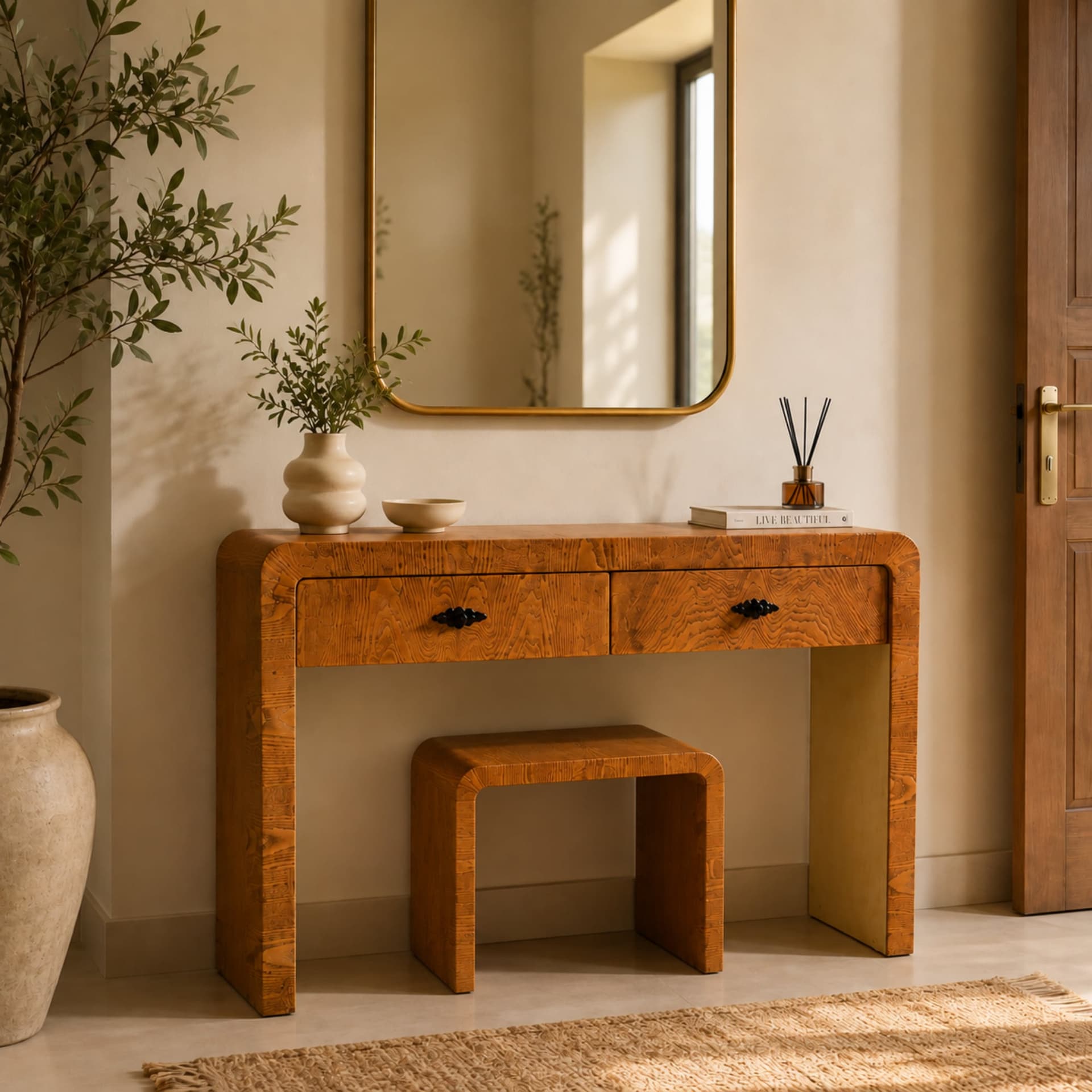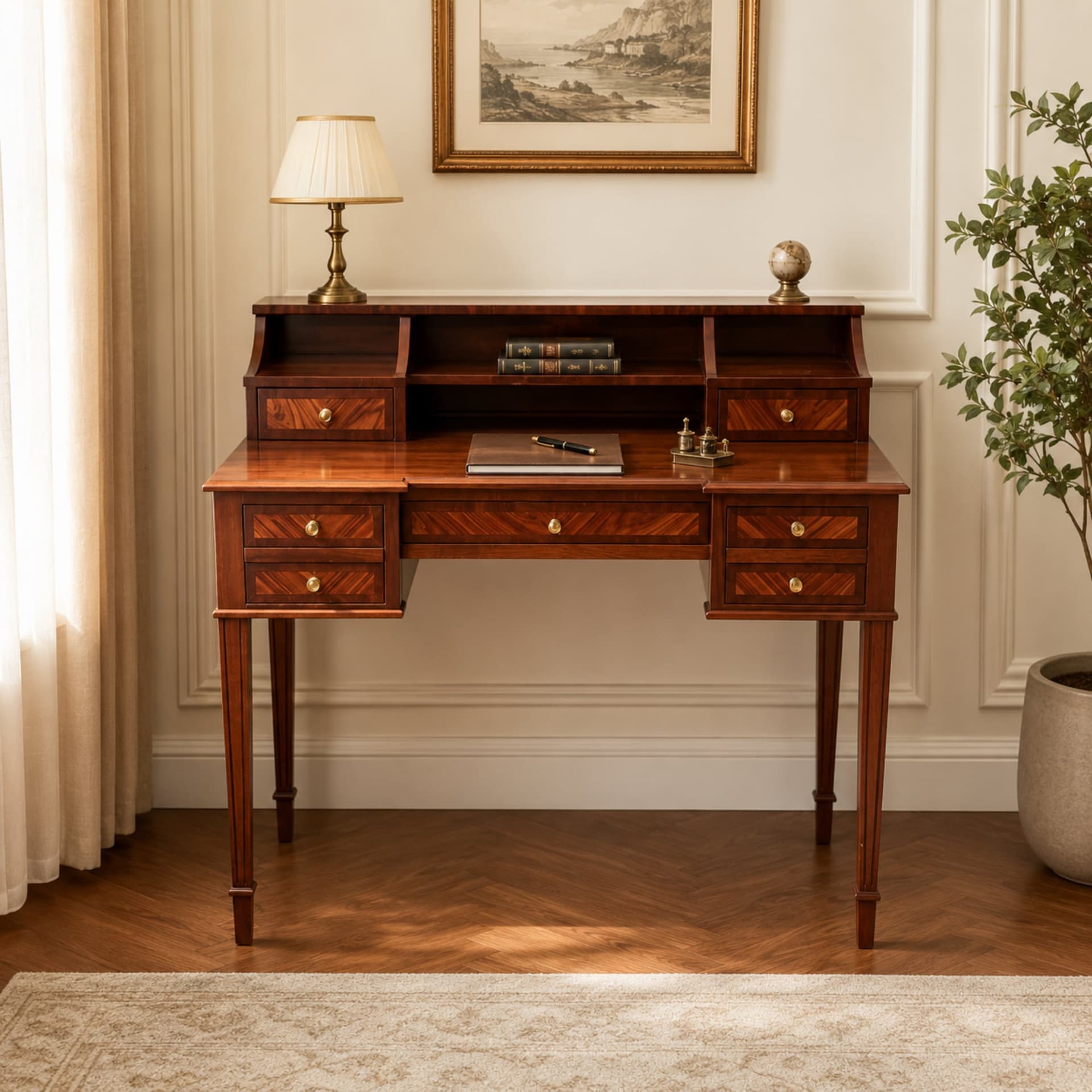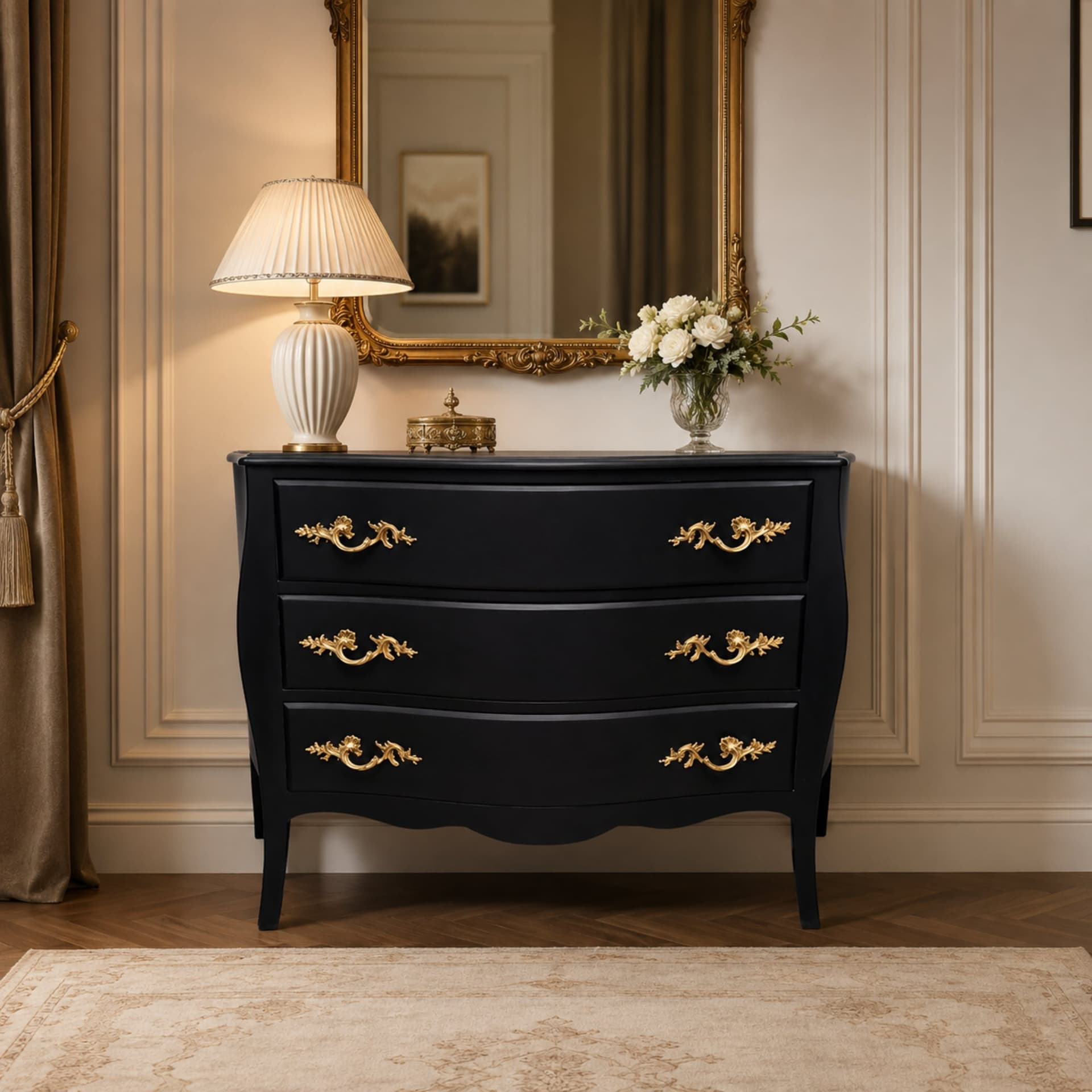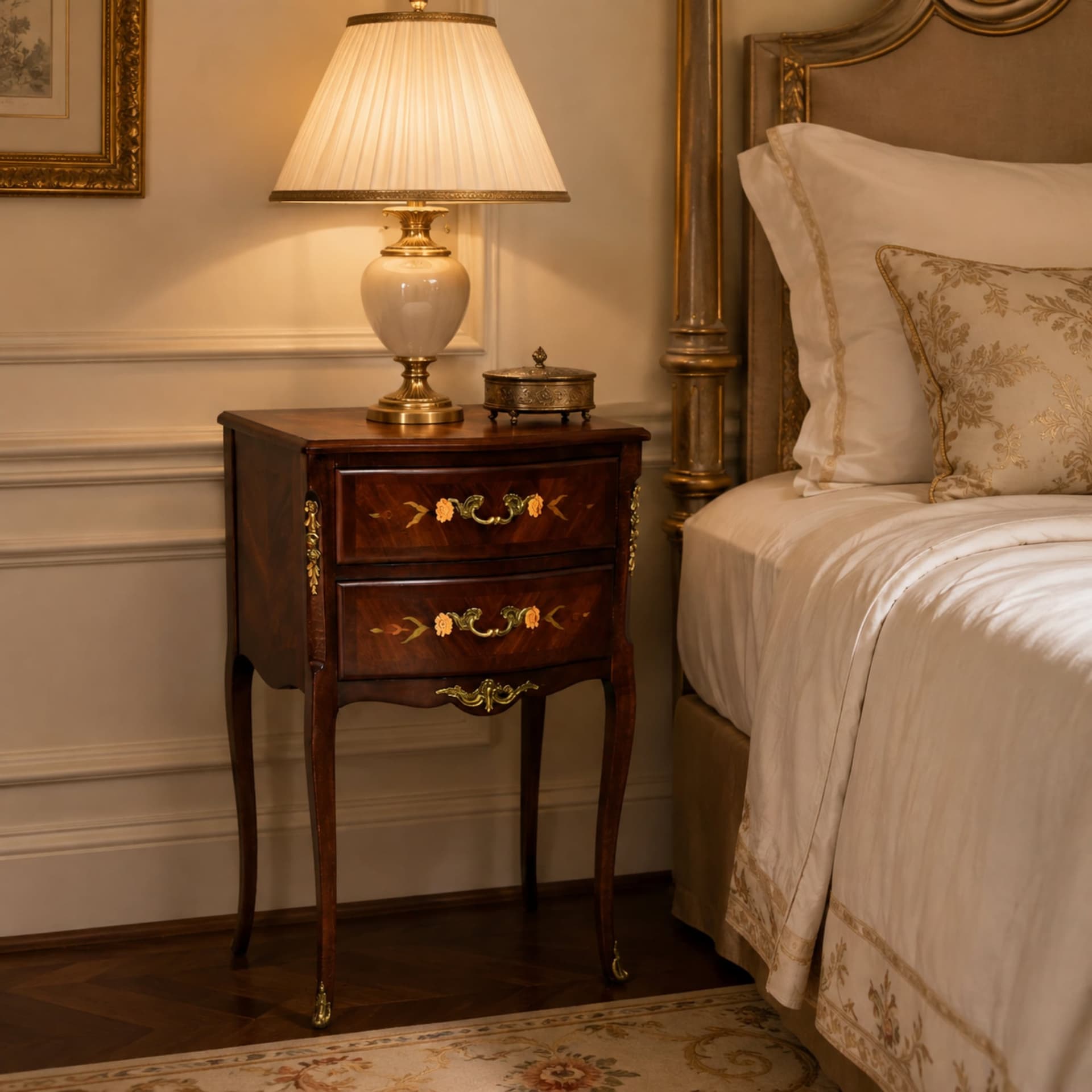
Louis XIV
Straight, majestic lines, strict symmetry, powerful often-stretchered legs, solar-inspired decors and acanthus leaves. The piece asserts order.
Craftsmanship · Expert page
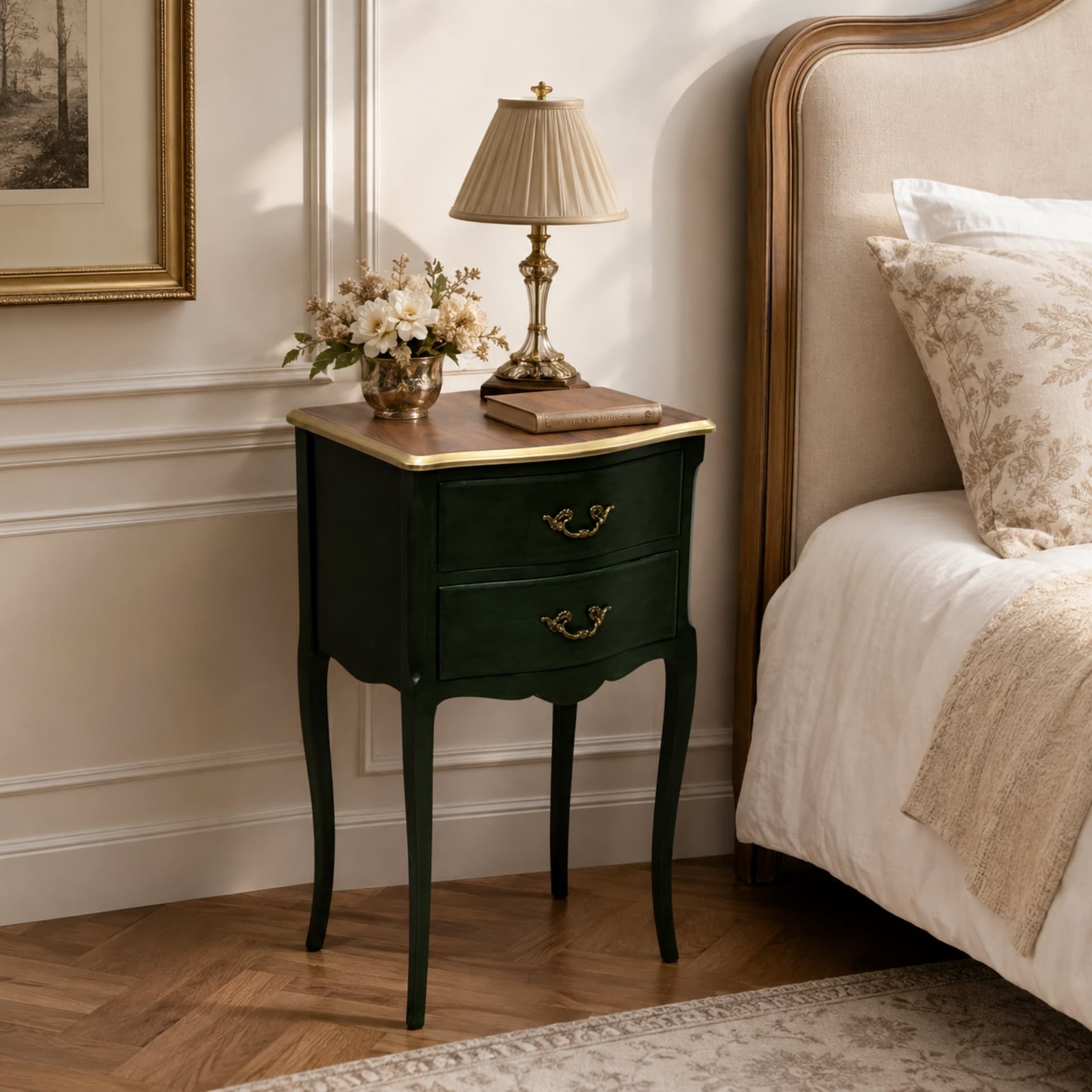
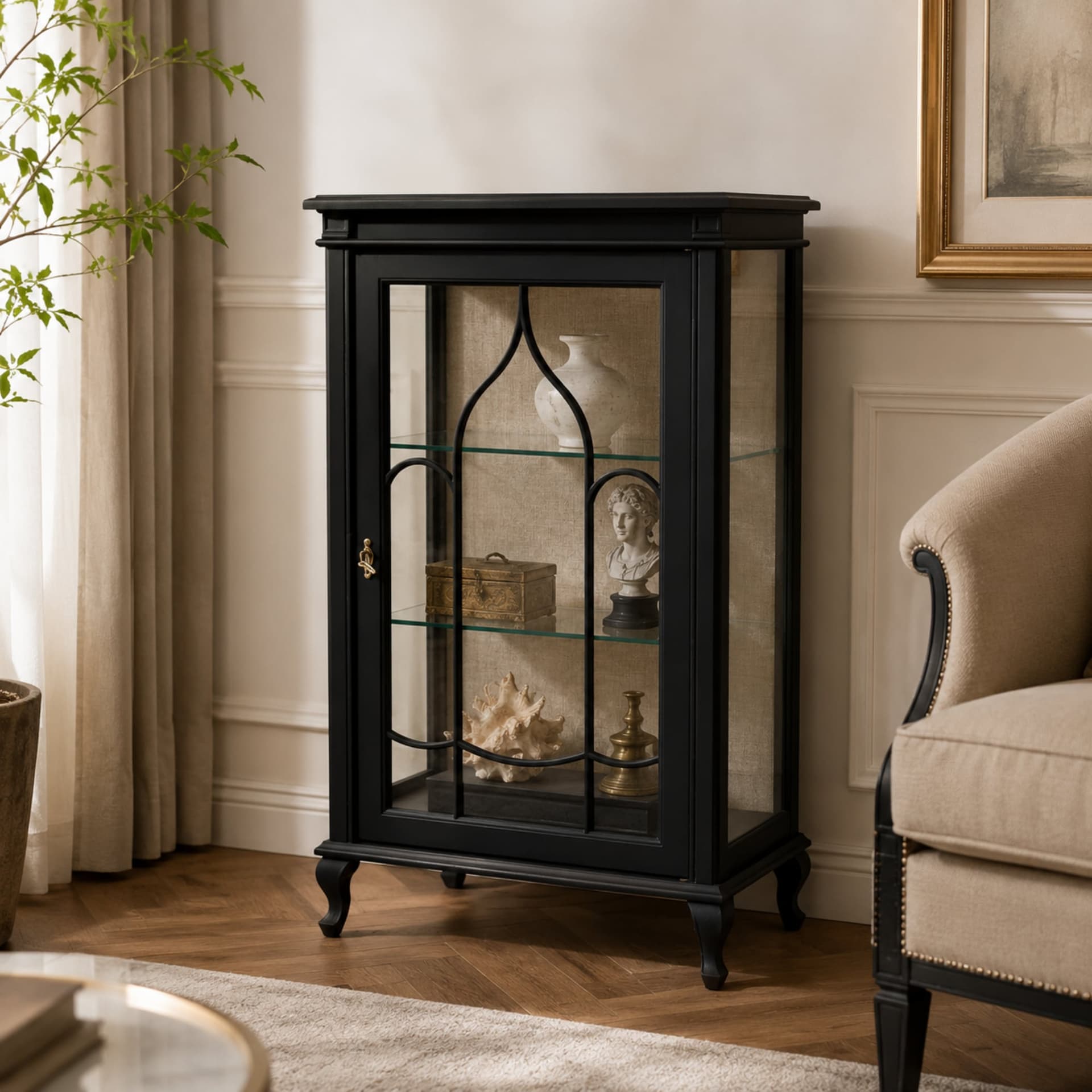
Three cues give a first reading: the line (straight under Louis XIV, curved under Louis XV, straight again under Louis XVI), the leg (powerful, cabriole, then tapered and fluted) and the ornament (solemn acanthus, asymmetrical rocaille, neoclassical repertoire). Certain attribution, however, requires examining the construction.
By the AZ Ameublement atelier — period furniture restored and executed at the bench, by the rules of each period.
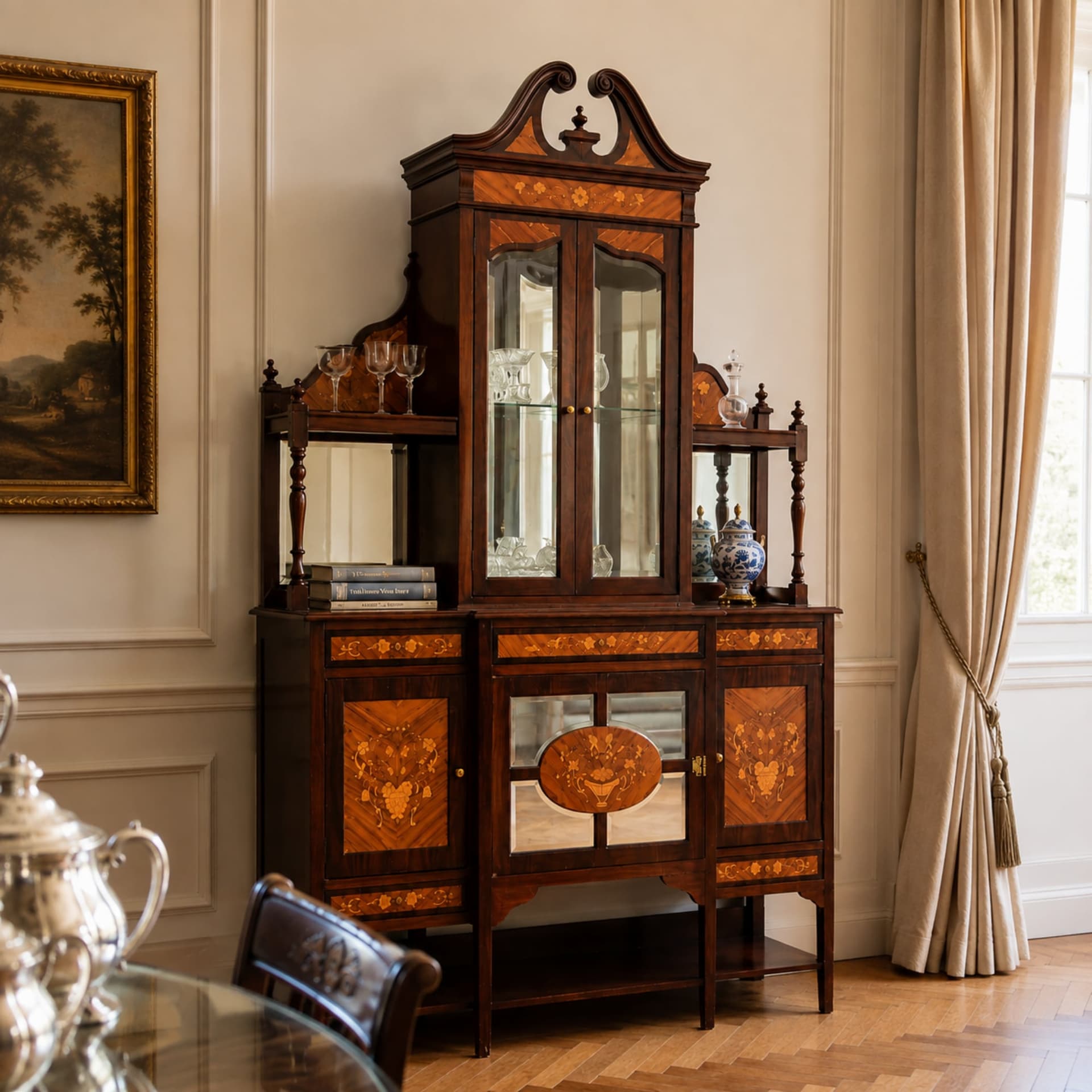
Straight, majestic lines, strict symmetry, powerful often-stretchered legs, solar-inspired decors and acanthus leaves. The piece asserts order.
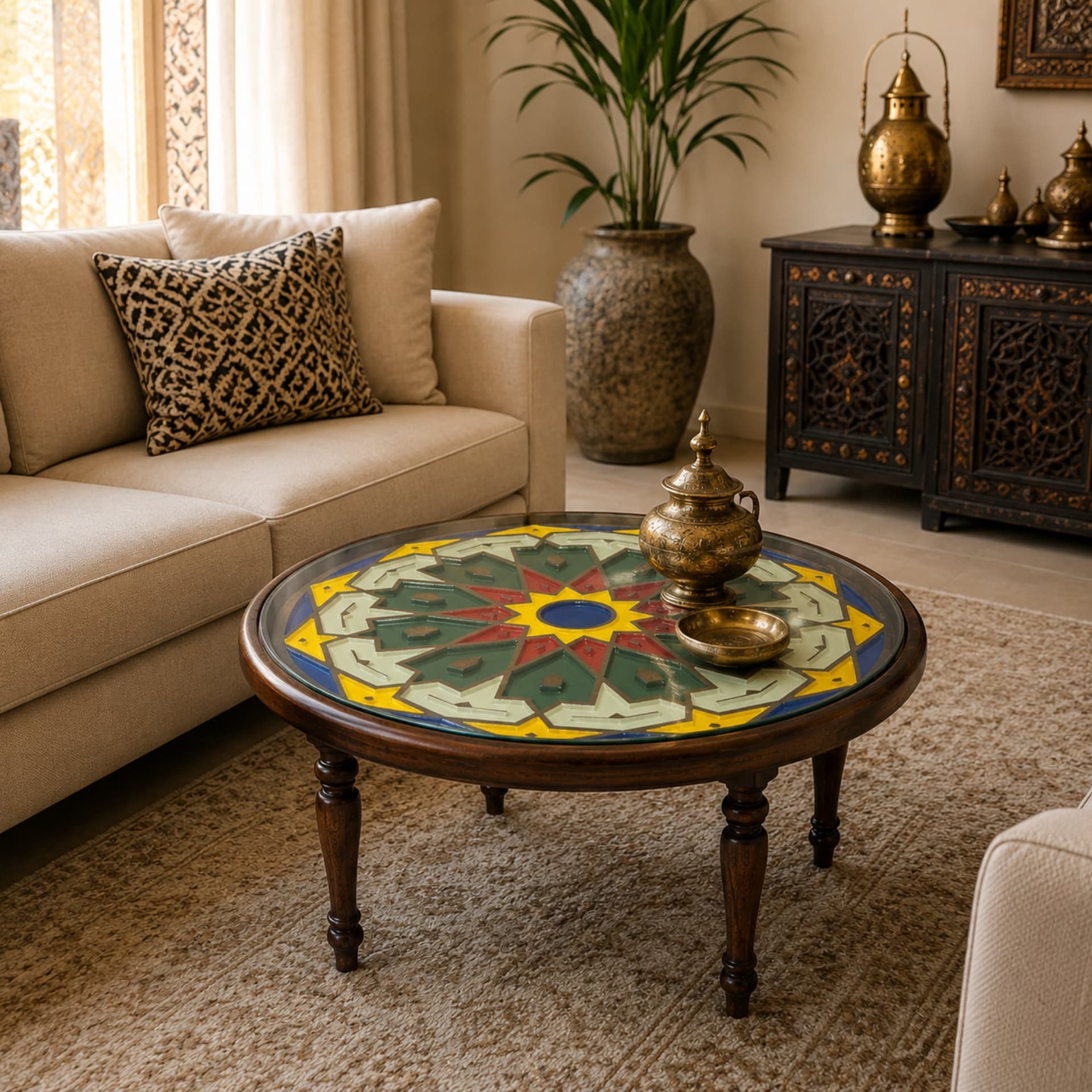
Curved lines, cabriole legs without stretchers, asymmetrical rocaille ornament, shells and flowers. The piece embraces movement.
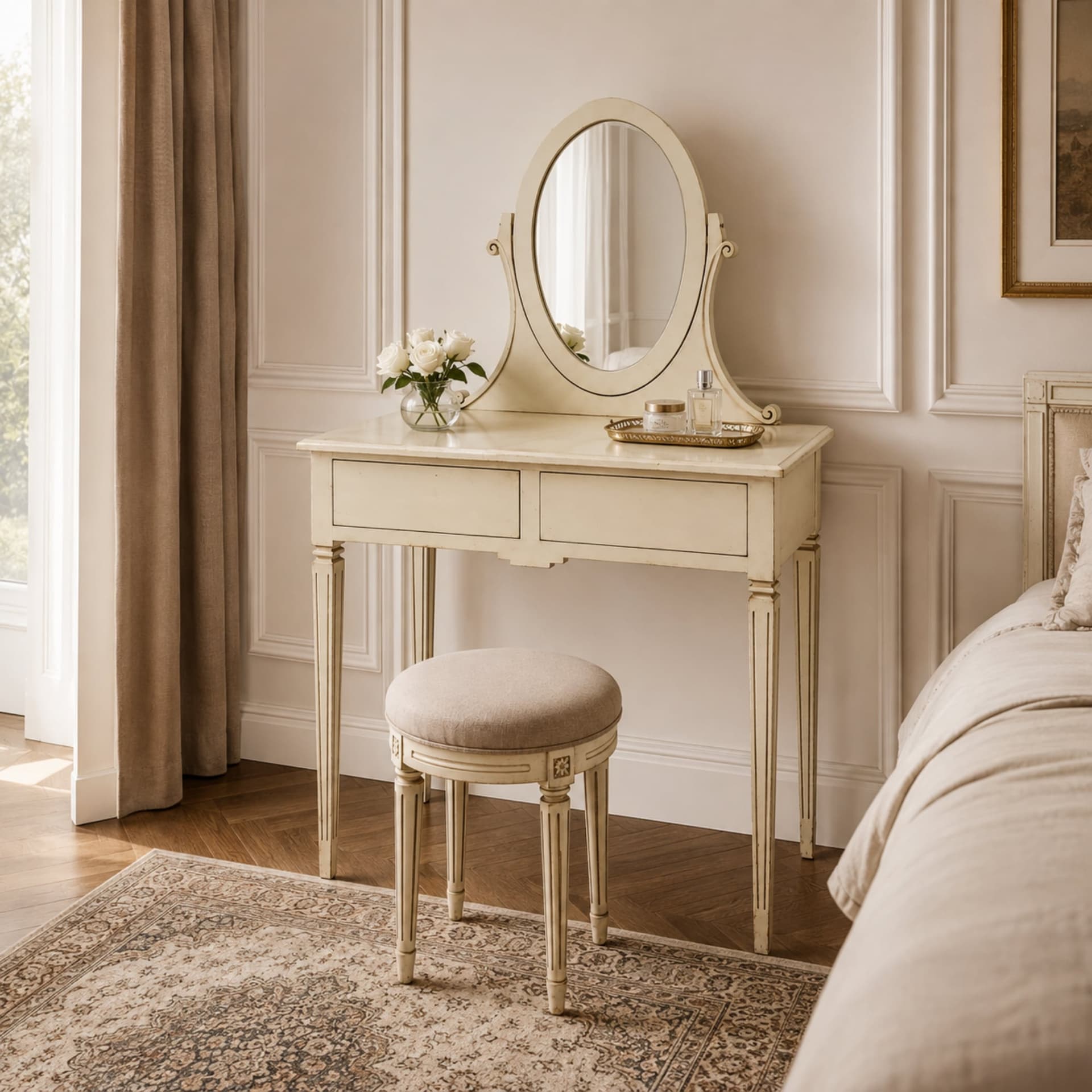
A return to the straight line, tapered and fluted legs, neoclassical ornament — ribbons, pearls, interlacing. The piece returns to measure.
01
A 'period-style' piece may be of the period or later: reading the joinery, timbers and tool marks tells them apart, without value judgement.
02
Surveys, photographs, mapping of earlier restorations: nothing is altered before it has been documented.
03
Conserve, consolidate or restitute: the protocol depends on the heritage value of the piece and its intended use, never on appearance alone.
04
Joinery, moulding profiles, ornament and finishes are executed according to the rules of the style concerned, with compatible materials.
05
The finish respects the reference period; the work carried out is recorded in a dossier delivered with the piece.
Last updated: