Craftsmanship · Expert page
What is marquetry?
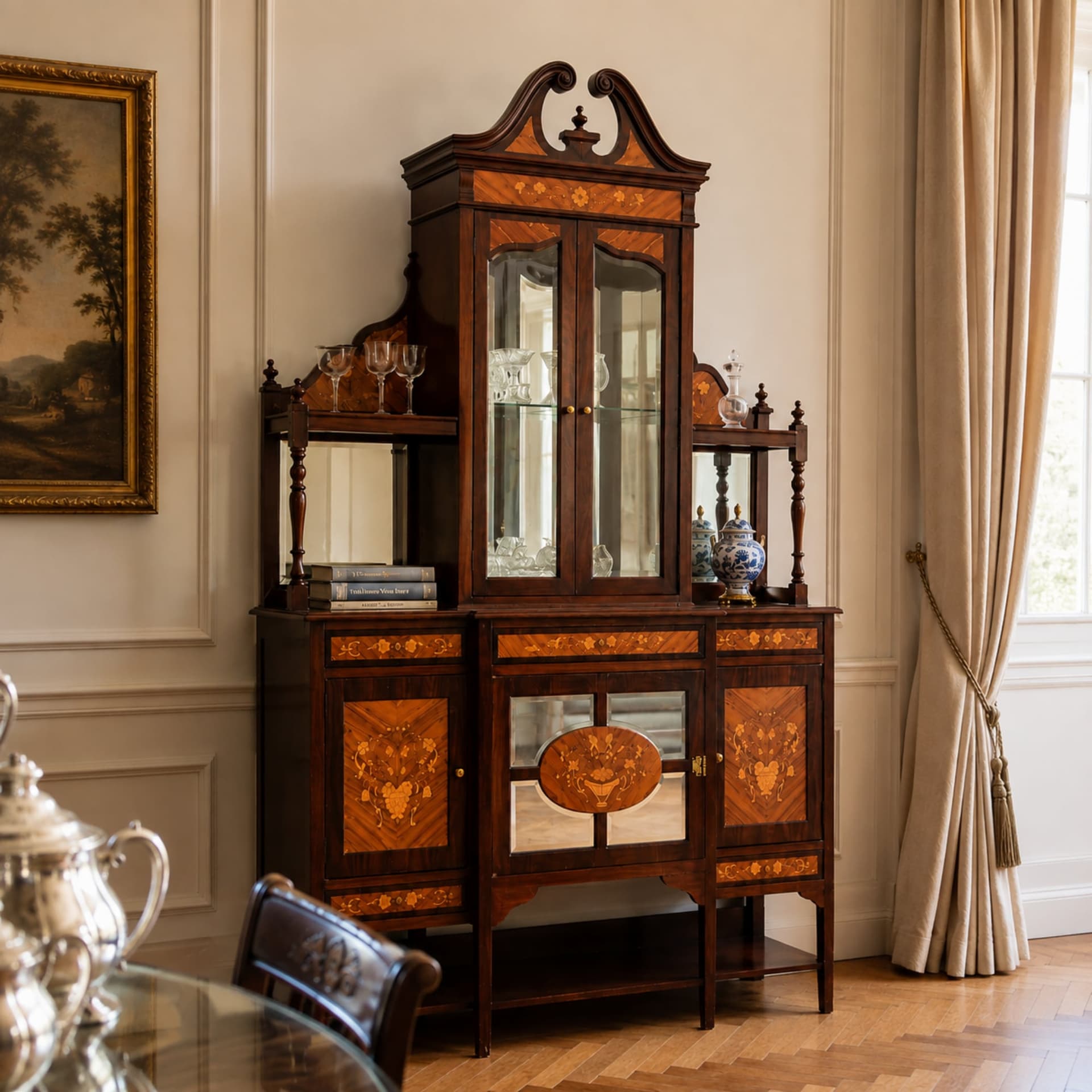
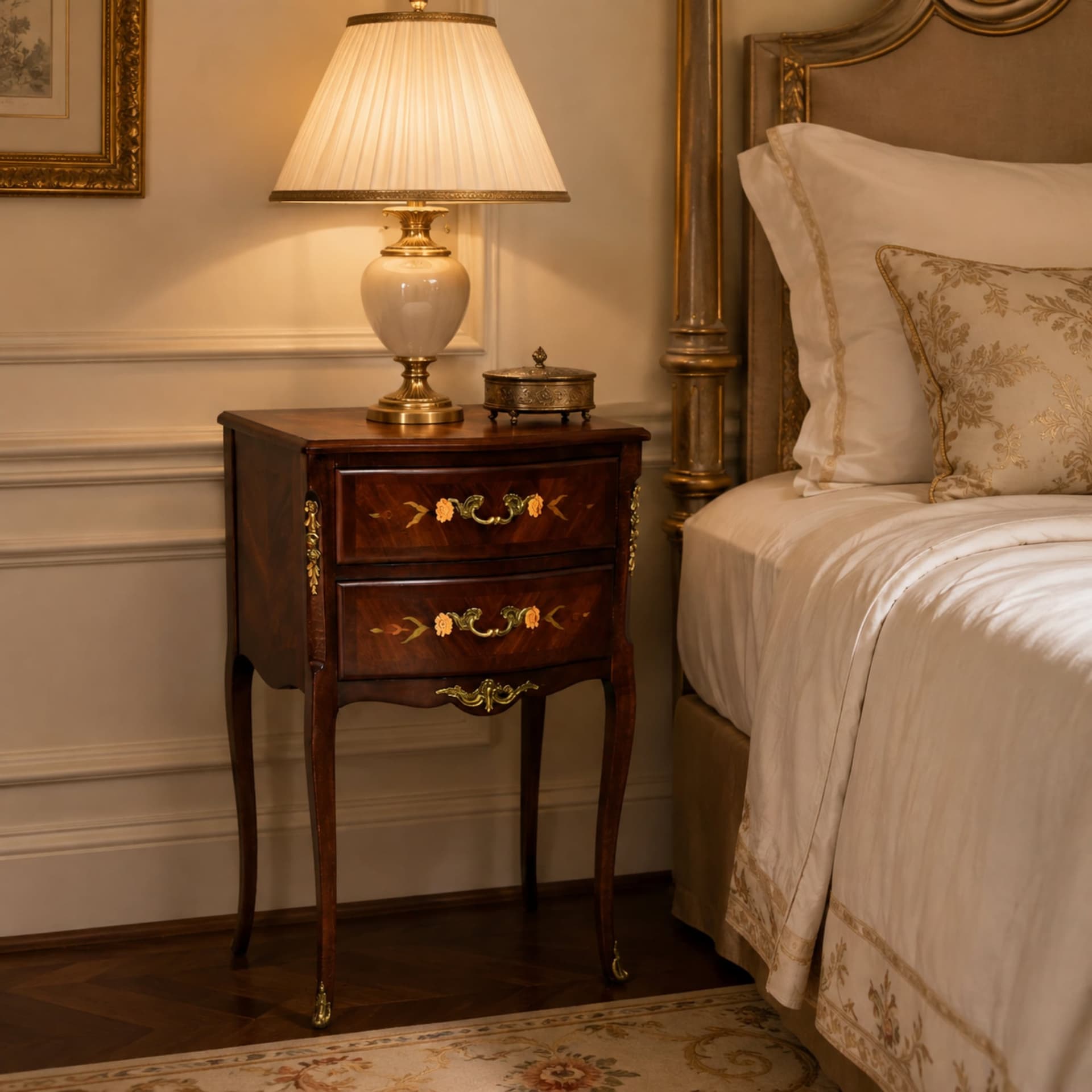
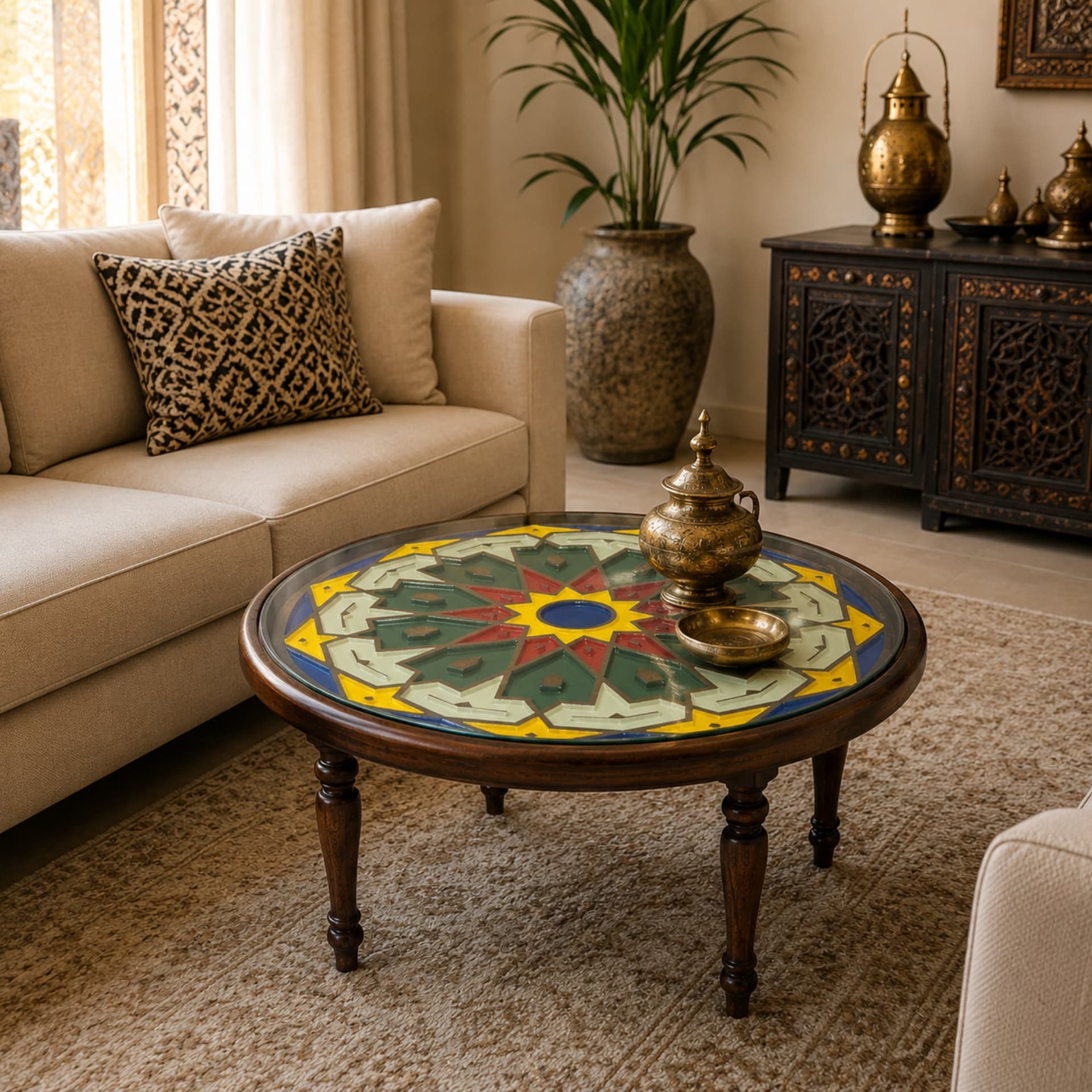
Marquetry is the art of cutting wood veneers — sometimes combined with other materials — and assembling them into motifs glued onto a substrate. It differs from plain veneering by the presence of a composed decor. Restoring it requires identifying the original species and technique before any intervention.
By the AZ Ameublement atelier — a family house of fine cabinetmaking, marquetry practised and handed down at the bench.
The atelier's method, in seven steps
01
Reading the decor
Identify the motif, the species used, the grain directions and the original cutting technique before any intervention.
02
Survey and drawing
Record the decor at full scale, on tracing paper or from corrected photography, to prepare the elements to be remade.
03
Veneer selection
Select leaves compatible in species, thickness and figure with the surviving parts.
04
Cutting
Cut the elements on the marquetry donkey or with a scalpel, stacked or piece by piece depending on the decor.
05
Assembly and gluing
Assemble the motif on paper, then glue it to the substrate — traditional hot glue for historic works.
06
Harmonisation
Level, tone where necessary and blend new parts with old ones, without erasing the history of the piece.
07
Finishing
Protect the decor with a finish consistent with the period of the work: French polish, wax or traditional varnish.
Glossary
- Veneer
- A thin leaf of wood intended to be glued onto a substrate.
- Parquetry
- A composition of veneers assembled by grain direction, without figurative motif.
- Stringing
- A fine line of light or dyed wood framing a decor or panel.
- Marquetry donkey
- The traditional cutting tool holding the saw perpendicular to the veneer packet.
- End-grain veneer
- Veneer cut across the grain, used for certain decors.
The limits of this page
- This method is general: every historic marquetry calls for its own diagnosis, carried out on the piece itself.
- No protocol or price can be set without inspection: the condition of the substrate, glues and veneers matters more than the motif.
- Species mentioned here are examples; for a given piece they are only stated after identification.
Last updated: